OPTIMIZES WAREHOUSE SPACE AND FLOW
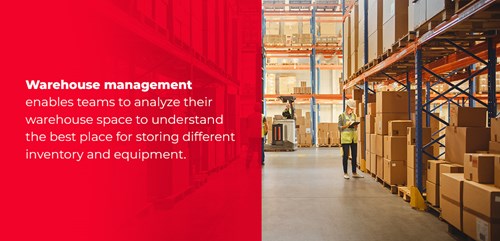
Regardless of the industry, the more warehouse space, the better. Warehouse management enables teams to analyze their warehouse space to understand the best place for storing different inventory and equipment. From there, they create a plan that ensures warehouse space is used effectively, allowing as much inventory storage as possible.
It can also identify areas where there is additional space available. Warehouse managers may use more space than needed when storing forklifts or specific stock, which can be freed for extra inventory. Part of this process may include changing the layout and design of the warehouse to ensure the effective use of space.
An additional benefit of optimized warehouse space is an improved flow of stock. Knowing when products come in and where they are stored allows managers to streamline their movement through warehouses, speeding up order fulfillment. And with customers focused on instant gratification and speedy deliveries, improved flow can help warehouse teams fulfill orders faster.
INCREASES INVENTORY VISIBILITY
An important aspect of warehouse management is knowing how much stock there is and where it is stored. Proper warehouse management ensures managers have in-depth data on inventory levels and where they are. This real-time understanding of inventory helps warehouse managers keep track of stock and spot any misplaced, forgotten, or stolen stock.
STREAMLINES LABOR
Labor can be challenging. Creating schedules and assigning tasks to the most suitable team member is critical to ensuring a warehouse operates effectively and efficiently while managing labor costs. Warehouse management aids in the optimal distribution of tasks, helping streamline labor.
In addition, warehouse management helps teams understand the ebb and flow of demand throughout the year. Warehouse managers can then schedule teams accordingly if they notice the warehouse is busier than usual during certain months, weeks, or days. This scheduling ensures warehouse teams have enough staff during busy times and aren’t overstaffed during quieter periods.
IMPROVES CUSTOMER SATISFACTION
As warehouse management streamlines many stock fulfillment and tracking processes, it makes it easier and faster for warehouse teams to pack, load, and deliver orders, allowing for on-time deliveries. There are also likely fewer mistakes with orders, especially when using a WMS.
Allowing customers to track their orders also improves customer satisfaction. Customers can monitor their order from when it is placed to when it is delivered. If there are delays, dispatch can tell customers about the cause, what is being done to resolve it, and when they can expect their deliveries. Faster deliveries, open communication, and improved tracking can help foster stronger, long-lasting relationships with clients.
Tips for Overall Warehouse Management
Developing an effective warehouse management system is vital for all industries. It can also be tricky with various factors to consider. These are some general tips on warehouse management:
- Invest in technology: Whether it’s a WMS, inventory management and barcoding systems, pick-assisting equipment, or simple conveyor belts, technology can help effectively manage warehouses. Technology can also offer comprehensive insights and real-time visibility on stock.
- Focus on staff: With the right team, a warehouse can achieve great success. Focus on hiring the right candidates and try to provide a comfortable work environment and work schedule. Warehousing can be intensive — burnt-out, exhausted, and uncomfortable employees may make costly mistakes.
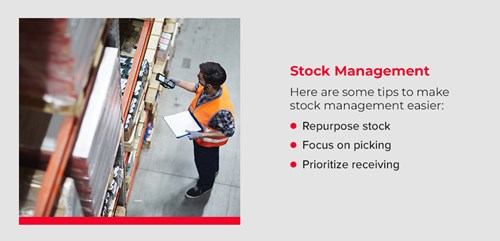
Here are a few more tips on warehouse organization, layout, and stock management to make warehouse management a bit easier:
WAREHOUSE ORGANIZATION
Cluttered warehouses are hard to navigate, slow down the fulfillment process, and can pose significant safety risks to staff. Keeping a warehouse clean and organized streamlines processes and makes it safer for everyone. Here are some tips on warehouse organization:
- Keep warehouses clean: Teach warehouse teams about cleaning as they go so no unattended stock or debris is lying around that can cause accidents. At the end of each day, encourage workers to return equipment to its proper place, from pens to forklifts. Knowing exactly where everything is can speed up various processes. Schedule weekly or monthly deep-cleaning depending on how tidy warehouse teams are.
- Label everything: Put labels on everything, including stock, different warehouse sections, and equipment. If it is in the warehouse, it should probably be labeled. Labels make finding stock quick and easy, speeding up orders. Using shelf and product barcodes or labels can also speed up stock takes and improve stock monitoring.
- Organize stock placement: Identify different types of stock, from the fastest moving and highest return items to the slowest movers. Putting the fastest-moving stock closer to dispatch can speed up packing. Remember that product popularity may change depending on the season. Try to keep similar items together, especially if they are usually ordered together.
WAREHOUSE LAYOUT
A warehouse’s layout can significantly impact workers’ efficiency and safety. It can also affect how much space is available to store stock. Here are some tips on warehouse layout:
- Consider flow: Having clear paths from receiving to storage, packing, and dispatch makes it easier for workers to travel between the different sections. Think about how to set up shelves and different areas in a way that is the fastest and easiest for teams to navigate. Ask the warehouse team for input on what would work best for them.
- Have workstations: Having multiple workstations throughout a warehouse ensures teams can access the necessary equipment, helping them work more efficiently. They can also prevent injuries as employees have dedicated spaces designed specifically for their work, limiting teams setting up in areas not suited for their tasks.
- Use zones: Create different zones based on how inventory needs to be picked and assign a team to each section. Zones can speed up picking as employees stay in one area with all the necessary equipment. A picking bin can travel between sections to fulfill an order.
- Ensure easy product access: Putting as much inventory on a shelf as possible can be tempting. Putting too much stock on shelves can impact fulfillment speed as employees spend more time searching for items and finding the safest way to remove them, so place products in an accessible way. Also, ensure the warehouse aisles are wide enough for staff and equipment to move around safely.
- Think tall: Where possible, use vertical storage. Vertical storage allows warehouse managers to maximize the amount of space they have without having to expand their warehouse.