4. Put Barrier Gates Around Docks
Barrier gates prevent fall injuries around the docks. These gates keep workers from accidentally stepping off elevated platforms or falling onto equipment operating below. Some types of gates will connect to lights for better communication of hazardous areas outside the barriers.
5. Improve Lighting Around Docking Areas
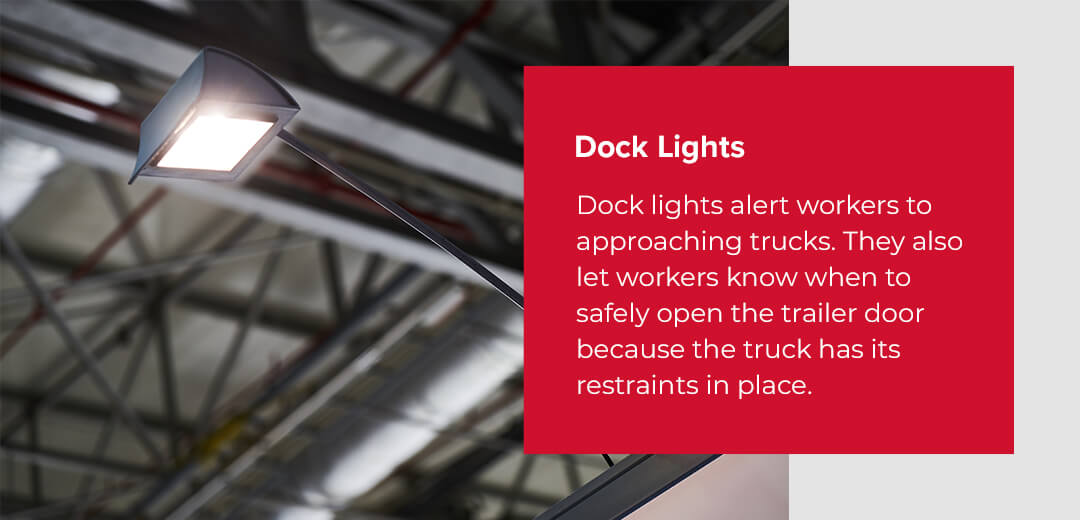
Road conditions or other delays may prevent a truck from arriving on time. Late-arriving trucks may require unloading during dimmer hours around and after sunset. Providing workers at the unloading dock with bright lights illuminates hazards in the area. The workers will be able to see potential tripping or slipping hazards at the dock to avoid them. Lights also show drivers where pedestrians are in the area, which may reduce collisions.
Bright lights at the docking areas also allow for extending warehouse operating hours to increase the number of trucks loaded and unloaded. By processing more inventory, the warehouse may boost profits, depending on other expenses.
6. Protect the Loading Area From Hail and Extreme Heat
The weather can thwart even the best efforts to quickly and efficiently load and unload trucks. Protecting the area from rain and hail minimizes the chances of slip-and-fall accidents. Protecting workers from falls can also prevent harm to cargo that could sustain damage as a result.
Aside from slips, precipitation can damage cargo, especially if the products have humidity or moisture exposure maximums. Cargo damaged by rainfall, hail, or snow may not cause immediate delays, but it may later create problems in profits, customer satisfaction, and final deliveries when products need reordering.
Extreme heat from working under the direct sun puts workers at a higher risk for heat exhaustion or heatstroke. Even heat stress requires workers to slow down their efforts and take breaks in the shade before returning to their jobs. These breaks, necessary for worker health, still cause inefficient operation at the dock. Preventing extreme heat conditions by using dock canopies can reduce the number of breaks workers require. As with all situations where workers could experience heat stress, they need access to fresh water and locations to cool themselves if they begin to feel sick from the heat.
Canopies that reduce heat at the dock for workers also protect any loads in the area from sun damage. Areas under direct sunlight can reach much higher temperatures than the protected spaces under canopies. Installing protective hail and sun canopies over dock loading and unloading areas preserves efficiency by protecting workers and products.
7. Regularly Clean and Maintain the Dock Area
Keeping the docking area clean and well-maintained reduces clutter that could slow down workers’ efforts to load or unload trucks or create tripping hazards. Maintenance tasks should include clearing away debris and unnecessary items, checking the integrity of all equipment, and verifying that communications lights work. A cleaner dock area reduces slowdowns that harm efficiency.
8. Train All Employees Working in the Area on Dock Safety and Operations
Workers need to know what their jobs require and how to do them safely. Training includes information on safely working around the loading and unloading areas, correct lifting and moving procedures, equipment use, communicating with others, and properly securing cargo.
When workers know exactly what to do and how to do their jobs safely, they waste less time asking for guidance and more time getting to their assigned tasks. By working with safety in mind, they also reduce their chances of injury from strained muscles, falls, or other accidents.
9. Always Use Dock Levelers for Enhanced Safety
The trailer and loading dock height do not remain uniform throughout the loading or unloading process. As the trailer takes on more weight through loading, it will sink lower. When unloading goods, the trailer raises.
To prevent the change in height from creating a tripping hazard, use dock levelers. These pieces create a smooth transition that covers the gap between the dock and the trailer, regardless of how the trailer moves.
Warehouse efficiency supports the operations of a productive docking area. When workers are ready to accept new inventory, they reduce the buildup of products in the docking area. Quickly getting the products to the shelves keeps the facility more organized and goods easier to find for pickers.
Warehouse workers who pack orders for shipping must also have good coordination to prepare products for loading with as little time wasted as possible. Waiting for one pallet of goods or one shipping order can significantly delay a truck from leaving. When trucks leave late, the deliveries risk not arriving on time. Customer satisfaction may suffer from the delayed receipt of shipped products.
The loading dock should have a protected area where prepared orders await a truck’s arrival for immediate loading. In warehouses with separate loading and unloading docking areas, each dock should have its crew to expedite the movement of goods onto or off the truck.
Efficient operation throughout the warehouse reduces the total number of people needed to keep the facility operating. For the docks, more efficient warehouse workers lessen the need to take away dock workers from their jobs to fill positions in the receiving, stocking, picking, or receiving portions of the facility.
To improve efficiency, a warehouse should automate as many operations as possible. Examples of automation include providing workers with barcode readers to verify picked orders, installing conveyor belts to reduce travel for order retrieval, or using automated vehicles to deliver products to the shipping area. These examples reduce the number of people needed for jobs and lessen the wear those workers experience while doing their jobs.
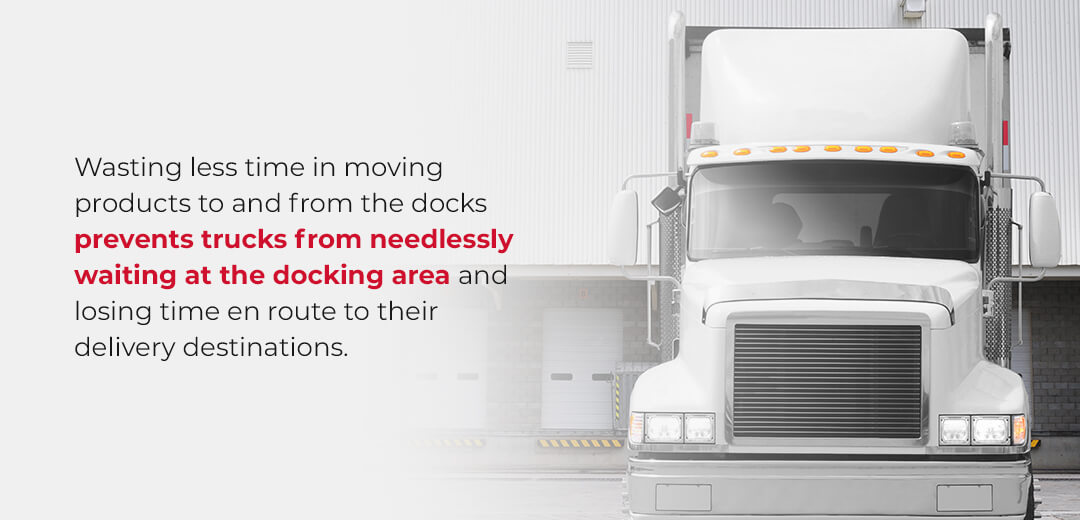
Highly efficient warehouse operations reduce delays in removing products from the unloading dock and getting them to the loading area. Wasting less time in moving products to and from the docks prevents trucks from needlessly waiting at the docking area and losing time en route to their delivery destinations.