


When cars sit in a lot for hours at a time, they can build up significant amounts of heat, causing potential health risks and vehicle damage. If your business is exploring how to protect cars from extreme heat, VPS offers trusted solutions for your requirements. Our shade structures are specially designed to protect assets from the elements and keep parking lots cooler and more comfortable.
Heat Protection
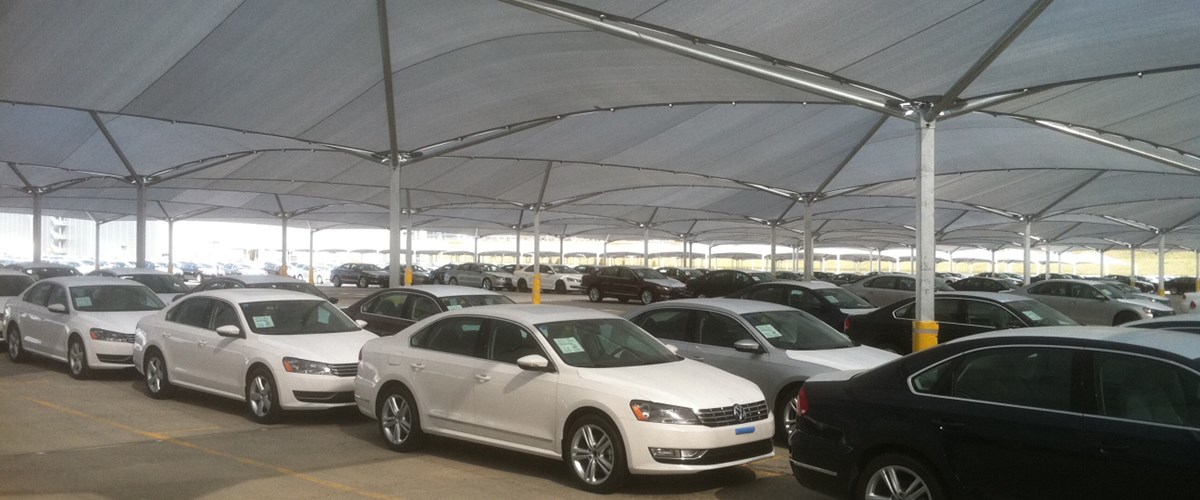
HOW OUR SOLUTIONS PROTECT CARS FROM EXTREME HEAT
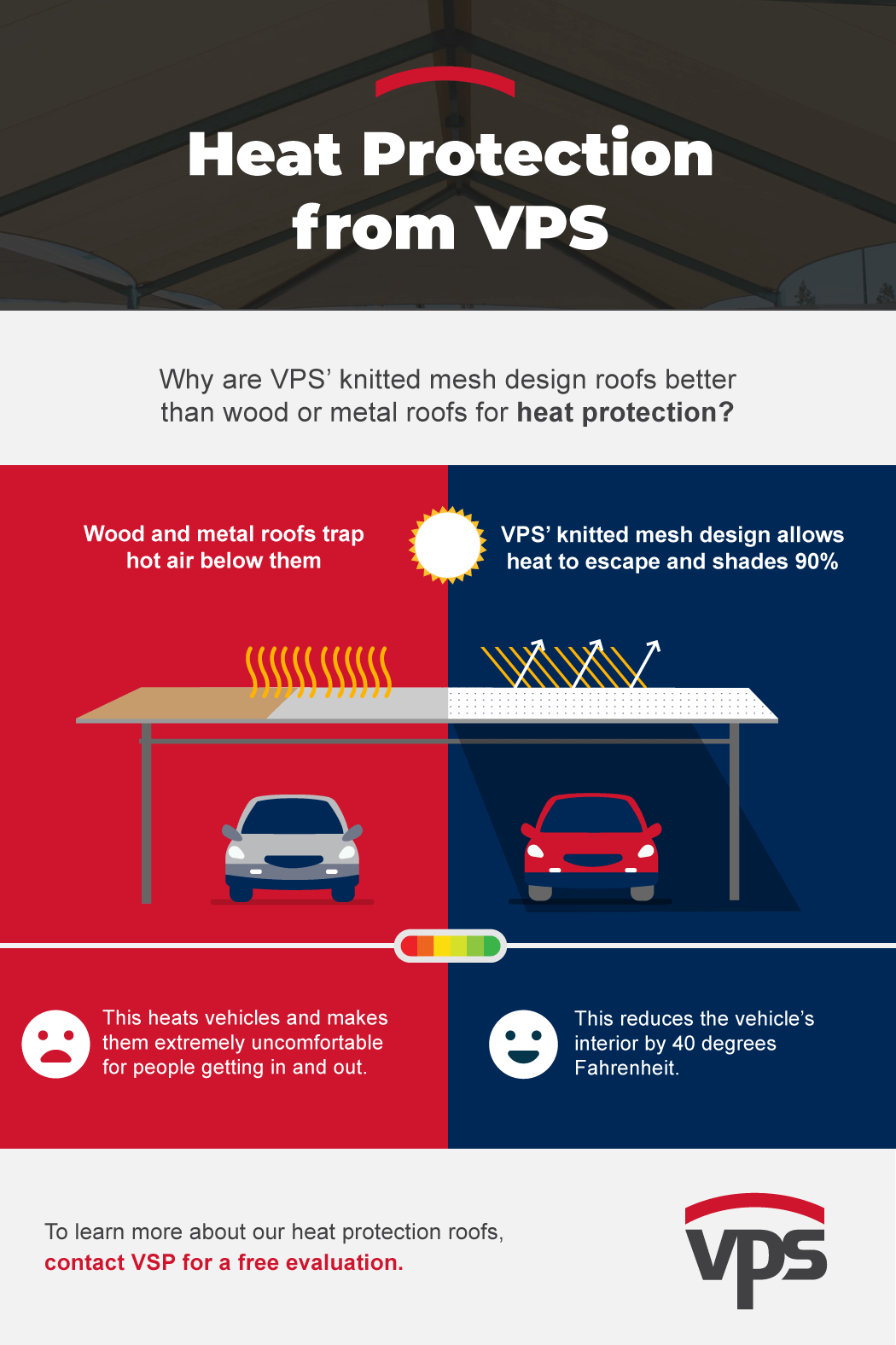
Unlike many shade structures built with metal or wood roofs, VPS uses specialized fabric with knitted mesh to let hot air circulate. Hot air can flow out through our shade structures instead of getting trapped under the roof, which keeps the lot cooler and safer.
At VPS, we have a broad selection to meet your unique property protection needs. When you need to shield cars from the sun’s heat, we can help with several different product options:
- Cantilevers: Designed with support structures placed away from walkways and parking spaces, cantilevers make navigation convenient for cars and pedestrians while also providing heat protection.
- Covered walkways: We offer covered walkway coverings that can work with covered parking lots to keep pedestrians more comfortable on their way to your facility.
- Large-scale coverage: With our mass coverage options, our expert design and engineering teams can develop a large-scale solution to reduce hat exposure for multi-acre parking and staging areas.
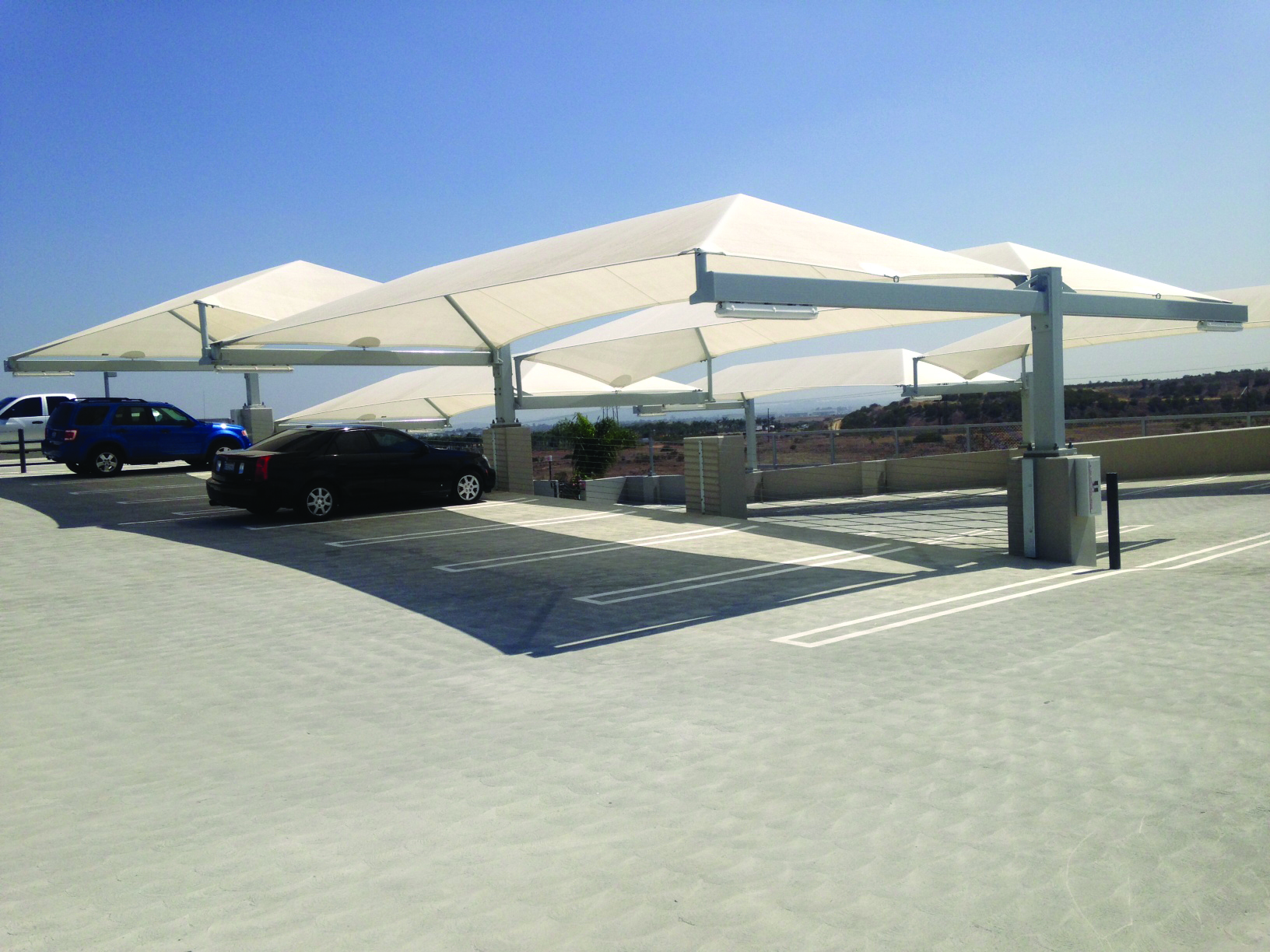
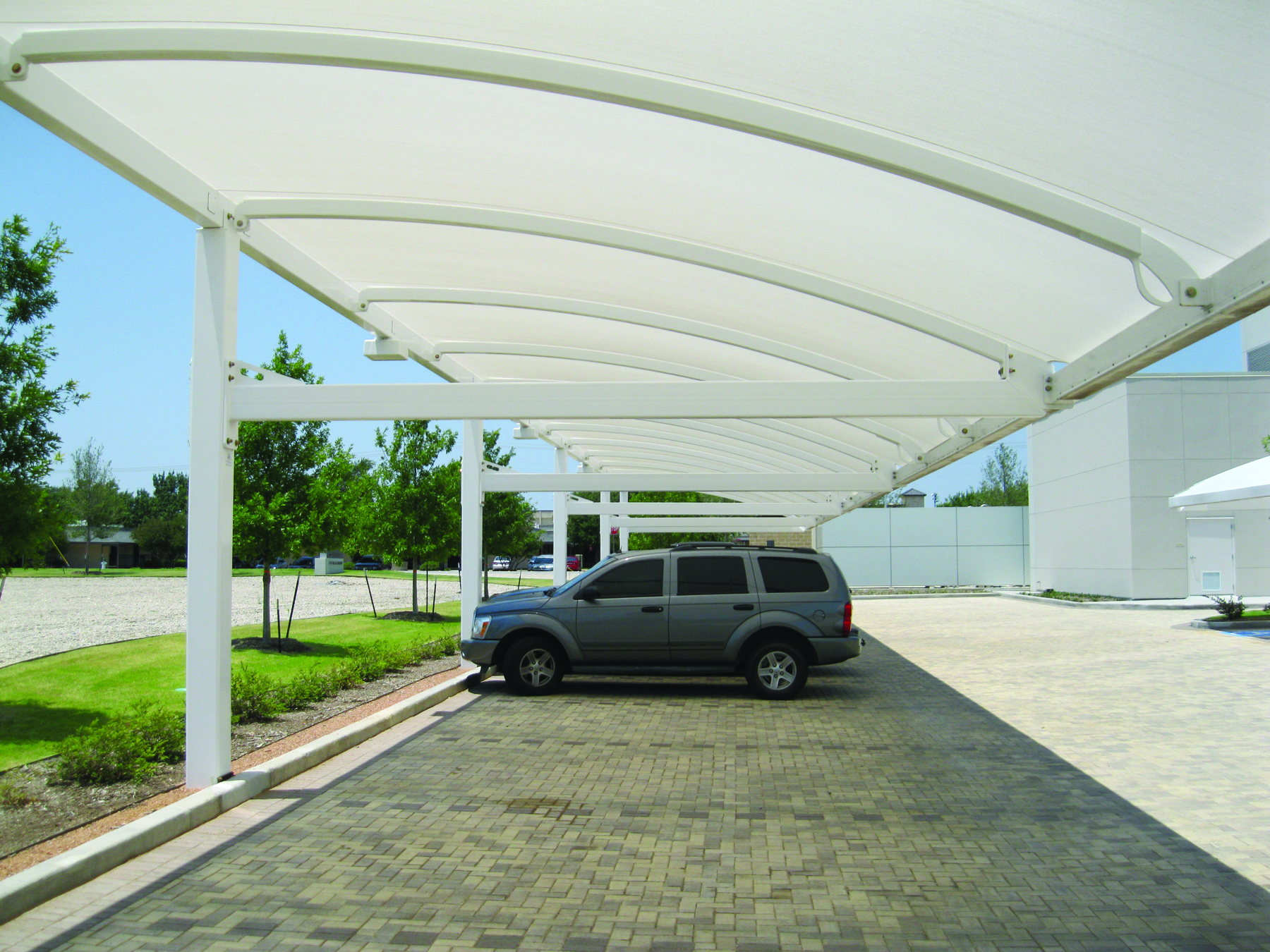
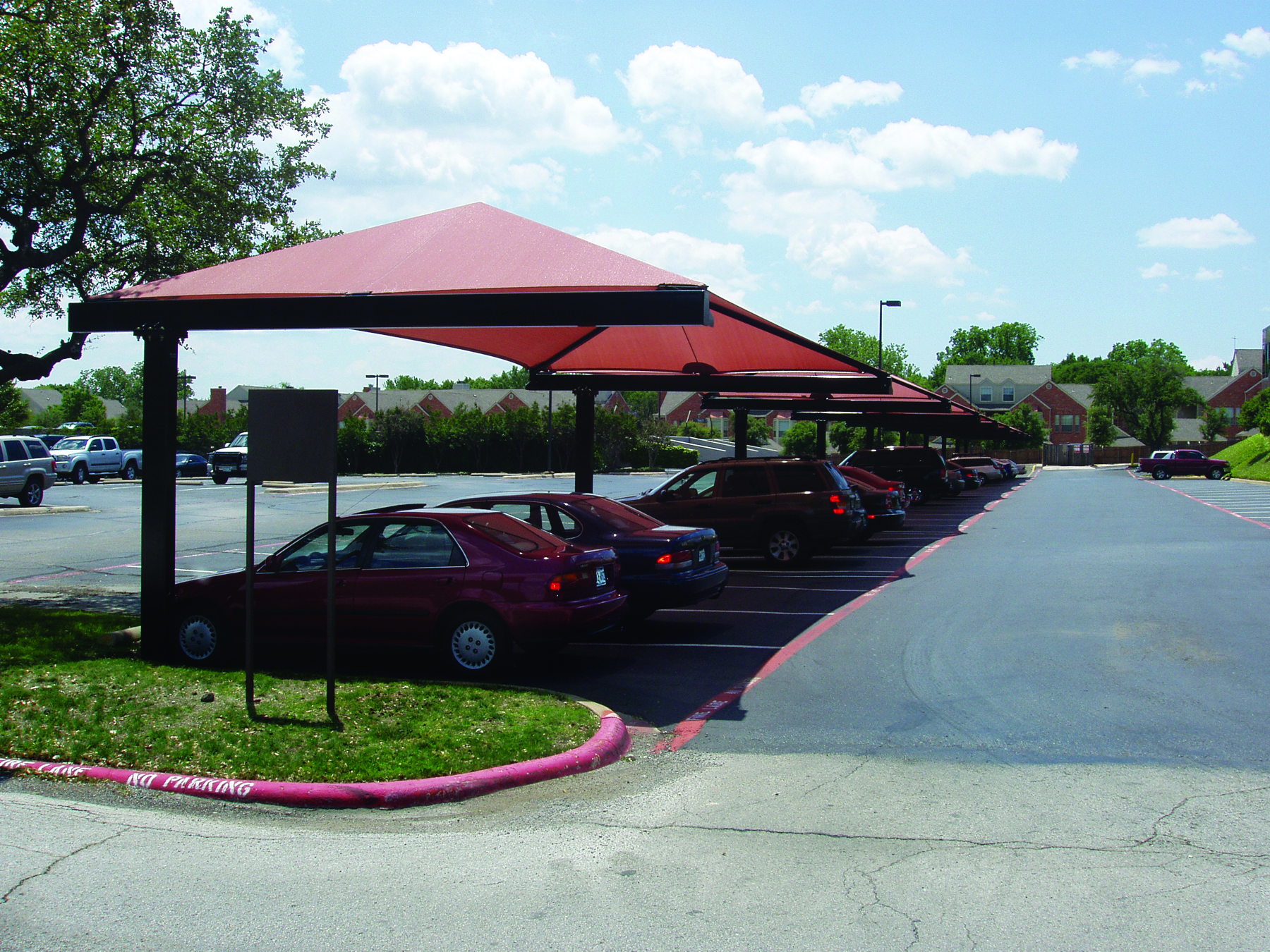
Thermal Performance and UV Exposure Reduction
Heat protection structures are designed to reduce direct solar load on commercial parking areas, vehicle storage lots, fleet yards, and transportation hubs. VPS fabric options can block up to 97% of UV rays, depending on the selected color and material, while still allowing airflow through a knitted mesh construction.
Actual temperature reduction varies by region, season, humidity, pavement material, wind, and structure layout. In many commercial applications, shade structures for heat protection can help lower vehicle surface temperatures, reduce interior heat buildup, and create more comfortable conditions for employees, customers, and vehicle operators.
Regional Heat Risk and Climate Exposure
Heat exposure is especially relevant in the Sun Belt, Southwest, Southeast, and Mid-Atlantic, where long warm seasons and frequent 90°F-plus days can increase the burden on outdoor vehicle assets. In the Southwest, solar intensity and radiant pavement heat are major design considerations. In the Southeast and Mid-Atlantic, humidity, storms, and heat index conditions may influence structure planning.
Regional engineering requirements can shift based on solar exposure, thermal expansion tolerance, wind loads, drainage, and applicable building codes. VPS evaluates site-specific climate conditions to help each structure support asset protection, airflow, coverage goals, and long-term performance in the intended environment.
The Hidden Cost of UV Damage
Continuous UV exposure can degrade vehicle finishes over time. Clear coats may break down, paint may oxidize, dashboards may crack, and leather or interior materials may dry out. For dealerships, rental fleets, corporate fleets, and automotive staging areas, those issues can lead to reconditioning costs, lower trade-in values, and more work before a vehicle is ready for buyers or operators.
Customer experience can also be affected. Car buyers may notice sun-baked interiors or visible wear on the finish before a test drive. Employees and fleet operators may enter vehicles that have been sitting in extreme heat during peak summer conditions. Covered parking can help reduce thermal shock and preserve a more showroom-ready vehicle condition.
ROI Timeline for Commercial Heat Protection
Heat protection structures can support ROI through several operational factors, such as reduced vehicle reconditioning needs, longer asset appearance life, improved customer comfort, and lower heat stress on parked vehicles. For electric fleets, reduced cabin heat may also help reduce initial HVAC demand when vehicles return to operation.
The payback window depends on fleet size, vehicle turnover, inventory value, local climate, site use, and the selected structure design. Dealerships may evaluate ROI based on inventory cycles and reconditioning expenses. Transportation hubs may consider premium covered parking revenue. Corporate fleets may evaluate continuity, employee comfort, and long-term asset protection.
Advantages of Heat Protection From VPS
When you invest in heat solutions from VPS, you can gain several operational advantages, including:
- Decrease risk of downtime: With shade structures to help protect your resources from the elements, you can reduce the risk of weather interrupting your day-to-day operations.
- Increase inventory security: We offer increased peace of mind by helping shield cars and other assets on your property 24/7.
- Improve customer safety: Investing in our shade structures allows you to prioritize customer safety and comfort with durable canopies to help shield them from heat exposure, hail, and UV rays.
- Keep cars cooler: Our heat protection offerings can keep car interiors cooler and more comfortable, even after long hours outside.
- Minimize employee exposure: Commercial shade structures provide protective shade to minimize sun and heat exposure of distribution center employees and reduce the internal temperature of trailers.
Heat Protection FAQs
These FAQs cover performance expectations, project sizing, solution selection, and operational benefits for commercial heat protection.
Cooling performance can vary by region, season, wind, humidity, pavement type, and amount of direct sunlight. VPS shade structures are designed to improve comfort by reducing direct solar load and supporting airflow through specialized fabric. For a measurable expectation, VPS can review site conditions and provide application-specific guidance as part of a free quote.
Yes. VPS is built for large-scale commercial projects, including multi-acre parking, staging areas, and high-volume vehicle storage environments. Custom designs can account for traffic flow, clearances, access points, pedestrian paths, and site constraints while supporting consistent coverage across large footprints.
Cantilevers are often a strong fit for parking areas where vehicle access and ease of navigation are priorities, since support columns can be positioned away from parking spaces and walkways. Mass coverage is typically selected when the goal is broad protection over large areas, such as long-term parking, overflow lots, or staging zones.
Covered parking can help reduce heat exposure on vehicles and equipment stored outdoors, which may support more consistent day-to-day operations in peak heat periods. Results depend on the fleet, the operating environment, and how vehicles are used, which is why site planning and selecting the right solution matter.
Yes. Shade coverage can support more comfortable outdoor conditions for teams working around vehicles, loading areas, and pedestrian paths. Many commercial sites use covered walkways and shaded zones to help reduce sun exposure during peak hours while supporting safer, more consistent operations.
Explore Our Solutions for Heat Vehicle Protection
At VPS, we offer extensive asset protection expertise, streamlined project management services, and custom options for your applications. Our capabilities for large-scale projects allow us to meet your commercial property protection needs seamlessly.