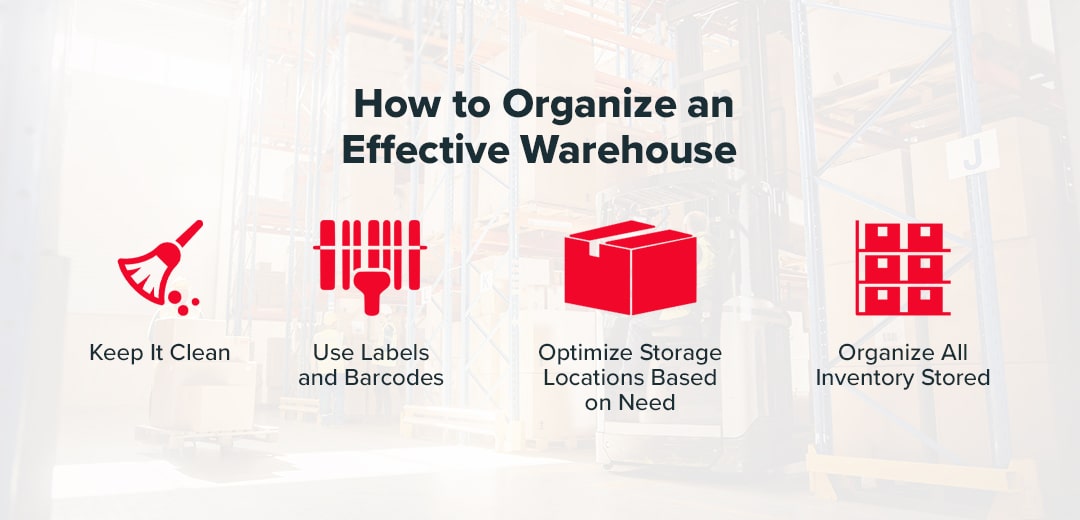
Managing an effective warehouse requires a layout and procedures that let workers use their time efficiently while staying as safe as possible. Safety, cleanliness, good organization, and better design all contribute to a highly efficient warehouse, minimizing waste and picking times while maximizing order fulfillment volume and accuracy.
1. Train Workers in Safe, Effective Warehouse and Inventory Management
Workers are the backbone of warehouse operations. They need thorough training in safety procedures and any inventory management systems to support the facility properly. Training in the picking process and using equipment can help prevent human errors in order fulfillment.
Well-trained workers are familiar with the processes and equipment that help keep track of inventory, such as labels or barcode readers. Effective training must continue after the workers’ initial onboarding education. Constant training on best picking practices gives workers the opportunity to continually improve their methods and accuracy.
2. Keep the Warehouse Organized
As with many strategies for effective warehouse management, the goal of organization is to reduce errors and picking times. Keeping a facility well-organized includes having systems in place to prevent products from accumulating outside of their designated spots on the shelves. Designate a space for newly received goods awaiting a permanent location and products that need reshelving due to order picking errors.
Quickly getting goods in their proper places ensures that workers can find what they need as soon as possible. Well-organized facilities also make locating items easier for contractors and temporary laborers who may need to supplement staff during busy times. Careful organization lets these new workers navigate the warehouse and find products quickly.
3. Prioritize Cleanliness and Safety
The top five causes of injury cost the warehousing and transportation industry over $3.91 billion annually. Improved training and safety protocols can help reduce injuries, save money, and prevent lost time by making the site safer. Formulate a culture of safety within the warehouse through training and reminders of safe operations to keep workers thinking about how to work safely throughout their shifts.
Cleanliness is a crucial part of warehouse safety. Spills, narrow aisles, and clutter create hazards in the workplace that may lead to falls and injuries. Workers can improve safety conditions and keep the warehouse functioning efficiently by being diligent about:
- Keeping aisles clean and open.
- Replacing items after using them.
- Cleaning spills quickly.
4. Increase Usefulness of Available Space
Distribution centers are experiencing a surge in demand due to e-commerce practices. The most common fulfillment option for online orders is to ship them directly to the customer from a distribution center. This option is predicted to account for 46% of online orders within the next two years, showing a rising need to optimize space for distribution centers.
While the average capacity use for warehouses in 2022 was 66%, many facilities that used more than half their space had a capacity level average of 78%. These statistics indicate that warehouses need to make the most of their useable space.
If a warehouse is already using most of its floor area, installing vertical storage can increase the available space. Use the higher storage spots for rarely moved or seasonally distributed items. Finding new space by improving organization and adding more racking or shelves lets a facility expand its product storage without buying more real estate.
5. Establish Clear Lanes of Traffic
Create clear lanes of traffic that allow enough space for people and lift trucks to move without crossing paths. Keeping the aisles and lanes open and labeled allows the most efficient movement through the facility. Depending on the aisle space, consider creating one-way traffic lanes to help prevent accidents between pedestrians and warehouse vehicles.
Outline clear traffic lanes with floor markings to show the direction of travel and separate vehicle and pedestrian lanes. Preventing collisions in the warehouse that may lead to injuries can help the facility operate more efficiently.
6. Optimize Picking Strategies to Reduce Travel
Minimize the time and energy workers will need to spend picking products from around the warehouse for a single order. Batch runs involve picking similar items from the same warehouse area and bringing them to a central location. Workers can separate the items into individual orders at this location, making the packing process more efficient.
It takes less time for one person to gather ten units of one item than for ten workers to retrieve a unit individually. Trolleys let a single worker collect batch items from one warehouse area to deliver to the packing area, reducing the total time and improving picking times.
7. Allow Enough Room for Receiving and Shipping
Receiving needs a large warehouse area to organize products, break down boxes, and count goods to input into the warehouse inventory. Similarly, shipping needs a dedicated space for weighing, labeling, and sorting orders.
With enough space for shipping and receiving, these tasks don’t take up valuable space elsewhere in the warehouse. Having enough room for each step in the process also helps workers in these areas stay more organized and efficient.
8. Automate Processes When Possible
Automating tedious processes can save time and reduce errors. Conveyor belts can deliver products to the packing department instead of individuals walking to pull them from the shelves. Barcode readers can verify that a worker picked the correct products without another person manually checking the order.
Inventory management software can help reduce the number of tedious manual counts of warehouse products. The software calculates how many products come in and go out, updating the inventory based on those numbers. Cycle counting groups of stock at regular intervals verifies the software’s accuracy without counting every item in the warehouse.
Software with order sequencing gives workers the most efficient way to pick products for an order, helping reduce wasted steps and time. Order sequencing can also use zones to group order components for picking.
9. Use Signage to Communicate With Workers
Signage around the warehouse communicates essential information for keeping operations efficient. Even new workers or temporary staff can quickly learn the warehouse layout by looking for posted signs showing locations for product categories, storage zones, and traffic flow patterns. The signs can help these workers match the warehouse’s existing efficiency level as they learn their way around.
10. Reduce Excessive Inventory
Stocking goods that don’t move only takes up valuable space. Reducing inventory to only those products that sell will free up space for faster-moving products. Inventory management software and good record-keeping can quickly show which products move and which need downsizing from the facility.
An even more radical option is choosing lean storage practices. With a lean inventory, the facility only keeps products that sell quickly. While this practice requires careful coordination with suppliers and shippers, having fewer items on hand reduces the space needed, makes picking faster, and improves order fulfillment times.
Dock canopies may be profitable additions to a distribution center. They protect the space from sun and hail with various covering options depending on the space available, environmental protection needs, and financial constraints. With sizes to fit walkways or docking areas, canopies can improve safety and comfort and prevent product losses by protecting products from hail or UV damage, helping maintain warehouse efficiency and profitability.
Create a Return on Investment
Depending on location, these structures may qualify the business for tax credits or points toward LEED certification. Solar hail protection can also reduce utility bills and offer long-term protection for the dock area.
Solar hail protection structures add protection from hail damage and may provide a return on the initial investment through electricity savings. Shading the area near open dock bays can keep the sun’s heat from directly shining into the doorway and heating the area inside, reducing cooling costs.
Protect Products and Shipping Vehicles from the Elements
Products and shipping vehicles at the dock need protection from the sun, snow, and hail. Mass coverage structures can fit docking area dimensions from large to small. The mass coverage structures from VPS are the industry’s only option rated for snow loads of 30psf and above. Covering the docking area helps protect shipping trucks, lift trucks, and products left out during loading or unloading from UV rays, hail, or heavy snow.
Another option for covering docking areas is installing cantilevered structures. These covers offer hail and sun protection with a central support column instead of traditional supports at the edges. With fewer columns, cantilevers offer coverage while maximizing the space beneath them for maneuvering shipping vehicles in the dock area.
Improved Comfort and Safety for Workers
Workers experience cooler temperatures when protected from direct sunlight around docking areas. Covered walkways are another way to protect workers on the job as they move outside. Shady working areas may reduce fatigue caused by excessive exposure to the heat and sun during work.
Covering walking paths also keeps hail off sidewalks, reducing the risk to workers by preventing hailstones from falling onto the walkway. While workers should always remain alert to all workplace hazards, including slippery walkways, preventing wet sidewalks may reduce slip-and-fall accidents.