

Ultraviolet rays accelerate deterioration across commercial parking facilities. The damage extends beyond surface-level pavement issues. In fact, dark surfaces like asphalt can absorb up to 95% of solar radiation. This intense heat transfers to parked vehicles and breaks down pavement binders at the molecular level.
The financial impact is significant. Vehicle inventory damage, premature infrastructure failure, elevated energy consumption, and potential liability issues all stem from prolonged sun exposure. Learn how UV protection preserves long-term value and reduces operational costs.
How UV Rays Impact Parking Lots
UV radiation affects parking facilities in several ways, directly impacting ROI.
Damage to Vehicles
Vehicle exteriors and interiors suffer accelerated UV wear that diminishes resale value. By recognizing signs of damage, businesses can deduce the true cost of inadequate UV protection for parking lots:
- Paint oxidation: UV radiation breaks down paint pigments, leading to dull, chalky surfaces.
- Clear coat failure: Protective clear coats degrade under UV exposure, causing peeling and exposing the base paint.
- Headlight hazing: UV rays degrade headlight lacquer, causing a yellowed appearance that reduces visibility.
- Tire degradation: Rubber components dry out, crack, and lose their integrity over time. Extreme heat also accelerates dry rot and increases tire pressure.
- Interior damage: With extended sun exposure, dashboards crack, upholstery fades, and leather seats split.
- Battery failure: High temperatures cause battery electrolyte to evaporate rapidly. As a result, batteries in hotter climates often have a shorter lifespan.
- Fluid evaporation: Engine oil, transmission fluid, and coolant evaporate faster, reducing lubrication efficiency.
On a sunny day, the temperatures inside a car can rise almost 20° Fahrenheit within the first 10 minutes. While glass blocks some radiation, harmful UV rays still penetrate and cause interior deterioration. Protecting inventory from sun damage is a critical asset preservation strategy.
Damage to Parking Lot Infrastructure
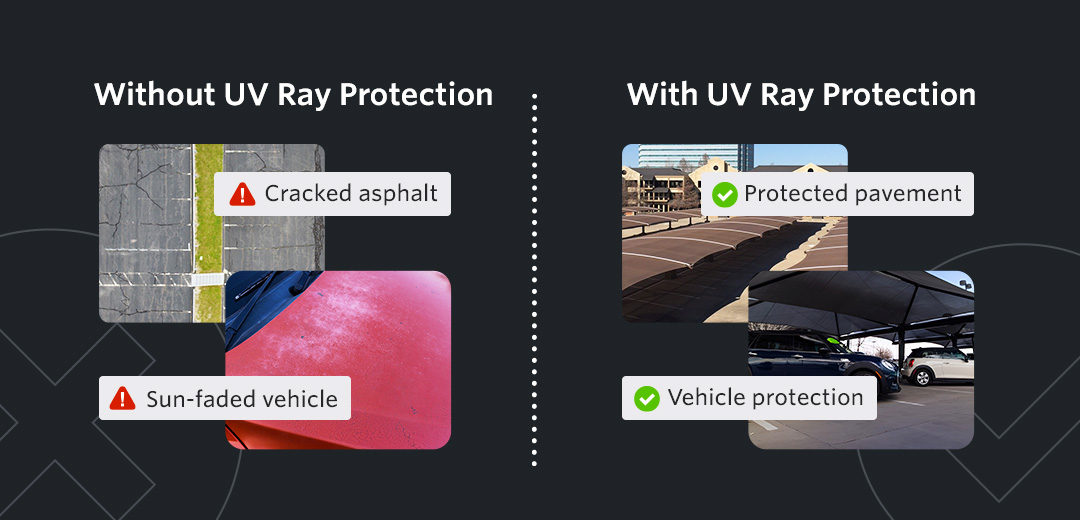
Along with vehicles, pavement degrades significantly under constant UV exposure. Solar radiation dries out the binder that holds aggregate materials together, leading to structural cracking across the surface.
These cracks expand into potholes, posing safety hazards and increasing liability. Painted lines also fade over time, making it difficult for vehicles to park properly. This premature breakdown often calls for costly resurfacing. Creating shade for parking lots directly addresses infrastructure degradation.
Energy Consumption and Heat Island Effect
Large expanses of pavement function as thermal batteries, absorbing and re-emitting solar energy. This phenomenon contributes to the heat island effect, where urban zones face significantly higher temperatures than neighboring areas.
According to the EPA, daytime temperatures run about 1-7° higher in these zones. However, heat island hot spots can be up to 22° hotter than rural areas.
Absorbed heat radiates into surrounding areas, increasing the demand for air conditioning in nearby buildings. Elevated energy consumption creates ongoing costs that could be averted with overhead shade.
Types of UV Ray Protection for Parking Lots
Here are a few strategies that address UV radiation damage in parking facilities:
Canopies and Shade Structures
Shade structures create a physical barrier between assets and solar radiation. Parking lot canopy UV protection blocks rays from reaching vehicles and pavement. These shade structures can look like:
- Cantilevers: These rigid support structures maximize navigation convenience and provide heat and UV protection.
- Covered walkways: Integrated pedestrian protection extends shade from parking lots to building entrances.
- Large-scale coverage: Mass coverage solutions address multi-acre parking and staging areas.
- Custom structures: Each project receives site-specific engineering to accommodate unique property characteristics.
Designed for commercial applications, these UV protection solutions offer comprehensive coverage.
Surface Coatings and Treatments
When applied directly to pavement, reflective coatings and sealants increase surface albedo. In other words, they keep pavement from absorbing solar radiation.
Conventional pavement, such as asphalt, can reach surface temperatures of up to 152° Fahrenheit at midday. Cool pavement products reduce surface temperatures by 10-16° compared to untreated surfaces.
High-performance treatments extend pavement life and minimize heat absorption. For example, polymer-modified sealers and aliphatic polyurea coatings offer greater UV stability. Regular sealcoating prevents sun-induced oxidation, brittleness, fading, and cracking.
Landscaping and Natural Shade
Vegetation offers both natural shade and aesthetic appeal. Many businesses implement trees, grass, and entire parks to reduce surrounding temperatures. Urban green infrastructure functions as a cooling source, absorbing heat and increasing air circulation.
Research indicates that air temperatures in tree-shaded parking lots range 4-8° cooler. Surface asphalt temperatures can drop by 36°, while vehicle interior temperatures decrease by 47° under tree canopy coverage.
However, natural landscaping presents limitations for large commercial facilities. Trees require years to reach effective canopy size, and coverage remains incomplete even at maturity. For facilities needing full UV protection, natural shade serves as a supplementary strategy.
Benefits of Implementing UV Ray Protection
Investing in UV protection delivers measurable returns, from damage prevention to enhanced property value:
1. Asset Preservation
Physical protection extends the service life of pavement and inventory alike. Parking lot canopies protect pavement from UV radiation, which accelerates breakdown.
When shielded from direct UV exposure, vehicles maintain their paint integrity and interior condition. This preservation proves valuable for car dealerships, where cosmetic condition impacts resale value.
Manufactured goods stored outdoors also benefit from UV protection. Many industrial products cannot incorporate UV stabilizers due to regulatory requirements.
2. Cost Savings
Investing in covered parking solutions can be extremely cost-effective long-term. With the right UV protection, businesses can minimize pavement cracking and maintenance. Lower sealcoating and resurfacing frequency preserves capital for core business operations.
A reduced heat island effect lowers ambient temperatures. As such, buildings near shaded parking lots tend to consume less energy for air conditioning. Vehicle damage claims are also likely to decrease when cars remain protected from sun exposure.
3. Enhanced User Experience
Shaded parking creates a more comfortable experience for employees and customers. Vehicles remain significantly cooler, eliminating the inconvenience of superheated interiors. This improved experience may encourage longer, more frequent customer visits.
Well-designed shade structures enhance a property’s overall appearance. Offering shade in parking lots positions commercial properties as customer-focused destinations. By improving customer satisfaction, an enhanced user experience translates into real-life business advantages.
4. Environmental Impact
Solar canopy installations deliver dual benefits, providing both shade and clean energy. These structures produce about 1 MW of electricity per 2 acres of parking coverage. In documented case studies, carport canopies generated around 140 MWh annually.
Environmental and financial advantages include:
- Energy initiative compliance: Solar structures help achieve governmental mandates, such as California’s 2020 solar initiative.
- Tax incentives: New solar panel installations qualify for local and state tax credits.
- Electricity cost reduction: Facilities can reduce electric bills through on-site generation.
Solar-covered parking lots represent strategic investments. These overhead parking structures combine asset protection with renewable energy generation.
Protect Parking Lots With VPS
UV radiation presents risks to both parking infrastructure and vehicles. Engineered protection solutions can effectively mitigate these threats.
VPS delivers custom-designed shade structures that provide comprehensive coverage. These structures serve automotive dealerships, distribution facilities, commercial real estate properties, and transportation hubs. Our team handles projects ranging from single-acre installations to multi-acre staging areas.
Explore the full range of protection products available for commercial applications. To discuss site-specific requirements and get a detailed quote, contact a representative today.