

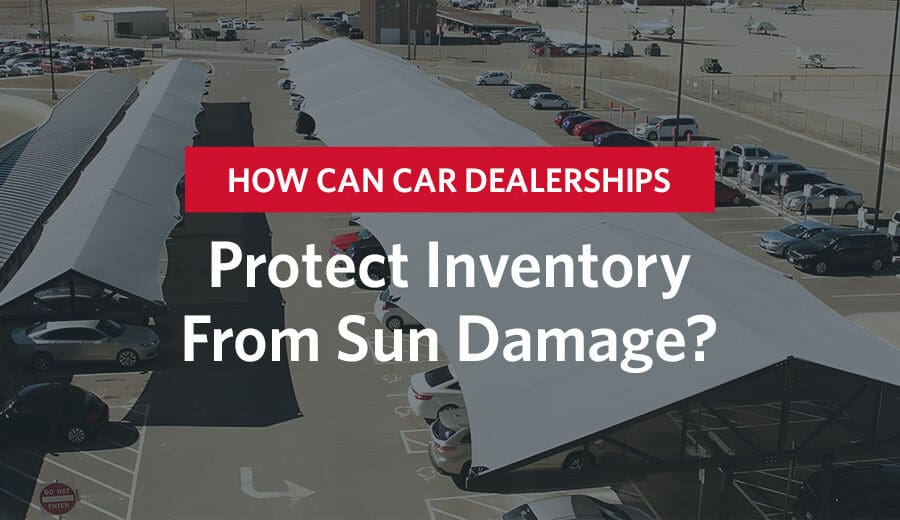
Hailstorms grab headlines with their dramatic impact on dealership lots, but ultraviolet radiation wages a quieter but equally devastating war on automotive inventory. It degrades paint, damages interiors, and causes fuel evaporation. When managing hundreds of high-value vehicles, how can car dealerships protect inventory from sun damage to help sustain the profit margins needed to stay competitive in an increasingly challenging market?
How Sun Damage Impacts Auto Inventory
Automotive inventory faces a triple threat from prolonged exposure to the sun, with each element of damage compounding to cause significant financial losses. Understanding these mechanisms helps facility managers recognize why car dealership sun protection strategies must tackle all types of ultraviolet (UV) damage simultaneously.
Paint Oxidation and Exterior Degradation
UV radiation breaks down the molecular bonds in automotive paint and clear coat systems. The process begins immediately upon exposure, with UV rays penetrating protective layers to oxidize the underlying paint pigments. This process manifests as the familiar dullness, chalking, and eventual peeling that makes vehicles appear aged and poorly maintained.
Dark-colored vehicles suffer the most severe damage, as darker pigments absorb more UV radiation and generate additional heat, accelerating the degradation process.
Interior Heat Damage and Component Failure
The greenhouse effect inside parked vehicles creates extreme temperature conditions that destroy interior components and electronics. On a typical summer day, dashboard and seat temperatures in unshaded vehicles may exceed 200° Fahrenheit. This heat can crack vinyl, warp plastic components, and damage sensitive electronic systems.
Additionally, dashboard, steering wheel, and seat surfaces act as heating elements, emitting longwave radiation that creates an oven effect inside the vehicle.
The Hidden Cost of Fuel Evaporation
Heat-induced fuel evaporation is often overlooked as a cost of sun exposure on car dealerships. Experimental studies on fuel tank evaporation show that rising temperatures dramatically increase fuel loss rates. When tank temperatures climb from 54° Fahrenheit to 82° Fahrenheit, evaporation rates jump by 50%.
Beyond the direct cost of lost fuel, evaporative emissions contribute to environmental compliance concerns and can affect vehicle performance during customer demonstrations.
4 Proactive Strategies for Sun Damage Prevention
Dealership managers have several options for implementing UV protection in car dealerships, ranging from labor-intensive maintenance routines to protective structural solutions. Each approach should be weighed against operational realities and long-term cost effectiveness.
1. Routine Maintenance and Protective Coatings
Regular washing, waxing, and application of ceramic coatings can help slow UV damage on individual vehicles. While professional-grade ceramic coatings offer superior protection compared to traditional wax, applying protective coatings to hundreds of vehicles is a substantial ongoing expense in materials and labor hours.
Many car dealerships may find that the cost of maintaining protective coatings across their inventory exceeds the practical benefits, particularly for vehicles with shorter lot stays.
2. Strategic Parking and Lot Management
Intelligent lot management involves rotating inventory to prevent vehicles from occupying the same high-exposure positions for extended periods. Dealers can position high-value or slow-moving vehicles near existing buildings or in naturally shaded areas to reduce direct sun exposure.
This approach requires minimal capital investment but demands consistent management attention and may compromise vehicle visibility to customers. The effectiveness of strategic parking decreases as inventory levels increase, making this solution more practical for smaller dealerships with limited inventory turnover.
3. Utilizing Temporary Covers and Sunshades
Individual vehicle covers and windshield sunshades provide targeted protection. However, they create significant operational challenges for large-scale implementation. While windshield sunshades reduce interior temperatures and protect dashboards, they must be installed and removed daily to maintain a professional appearance and allow customer access.
Full vehicle covers offer protection but require even more labor to manage effectively. The daily labor cost of installing and removing protective covers across hundreds of vehicles quickly becomes prohibitive for most dealerships.
4. Installing Permanent Shade Structures
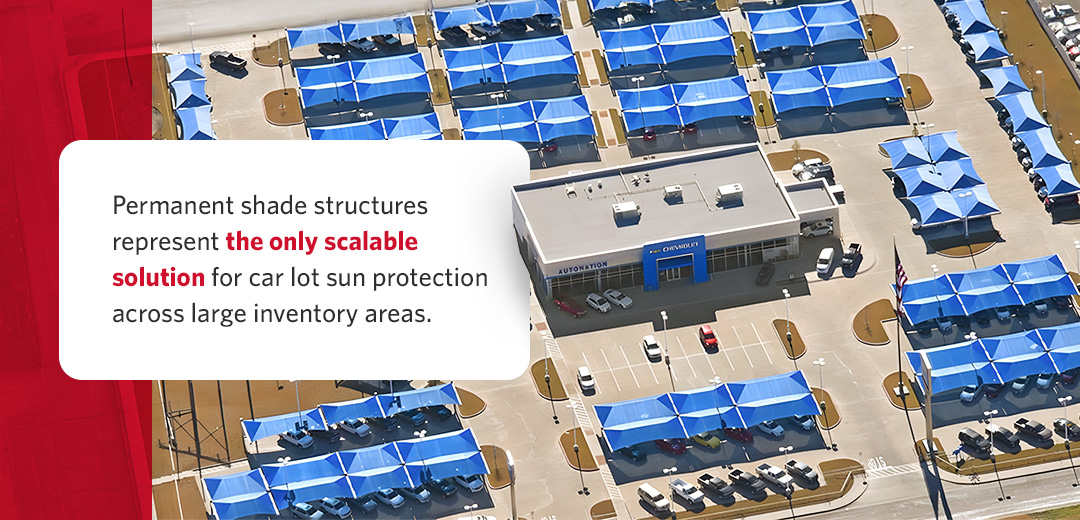
Permanent shade structures represent the only scalable solution for car lot sun protection across large inventory areas. These engineered systems provide continuous coverage without requiring daily labor input or the ongoing maintenance of individual protection measures.
Modern cantilever designs maximize coverage while minimizing the structural footprint. This allows dealers to protect many vehicles under a single installation. Unlike temporary solutions, permanent structures deliver more consistent protection regardless of staff availability or operational pressures.
Permanent Shade Structures As the Superior Solution
The business case for permanent shade structures becomes compelling when dealers analyze the total cost of sun damage against the potential long-term benefits of comprehensive protection. These systems address multiple operational challenges while providing measurable improvements to asset preservation and customer experience.
Consistent Temperature Reduction
Proper shading can reduce vehicle interior temperatures by 40° Fahrenheit compared to unshaded parking. This dramatic temperature reduction protects interior components from heat damage while creating comfortable conditions for customer interactions.
Lower temperatures can preserve dashboard integrity, minimize seat degradation, and maintain electronic system functionality. The consistent temperature control also helps eliminate the need for extended cooling periods before customer test drives. This supports sales efficiency and customer satisfaction.
Asset Preservation vs. Temporary Fixes
Permanent shade structures operate on a set-it-and-forget-it principle, avoiding the ongoing labor costs of temporary protection measures. Once installed, these systems provide more continuous UV protection for car lots without requiring consistent staff intervention or maintenance.
The structures also deliver secondary benefits, including protection from hail damage. This dual protection can make permanent structures significantly more cost-effective than implementing separate solutions for different weather threats.
Enhancing the Customer Experience
Shaded parking areas transform the vehicle shopping experience by eliminating the discomfort associated with superheated interiors and scorching exterior surfaces. Customers are likely to spend more time exploring vehicles when they can comfortably touch door handles, sit in seats, and operate controls without burning themselves.
Increased time spent evaluating vehicles can lead to higher close rates and improved customer satisfaction scores. Sales teams may also benefit from more comfortable working conditions during outdoor presentations and vehicle demonstrations.
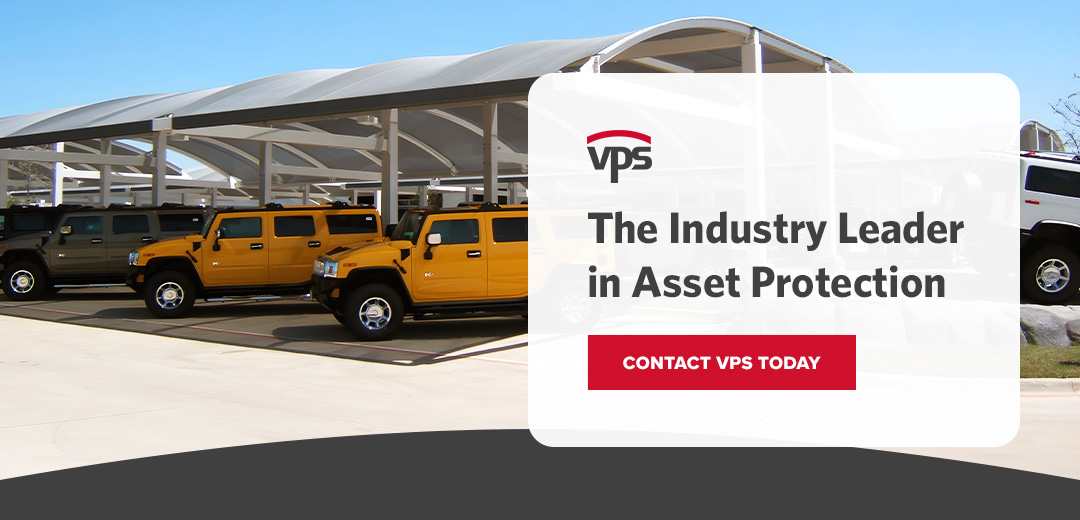
The Industry Leader in Asset Protection
VPS is the premier provider of engineered shade solutions designed for automotive dealerships. Unlike generic canopy systems, VPS auto dealership shade structures are engineered to withstand commercial use while providing maximum coverage efficiency.
The Heritage Series represents the pinnacle of sun-damage-prevention technology for dealerships. This solution lends itself to mass coverage to help protect thousands of parking spaces. These systems incorporate advanced engineering principles to minimize structural footprint while maximizing protected area so dealers can maintain more optimal inventory visibility and accessibility.
Along with car dealership UV protection, forward-thinking dealerships can implement solar-integrated protection systems. These solutions help generate renewable energy while protecting inventory. Additionally, installation costs can potentially be offset by energy savings. This dual-purpose approach positions dealerships as more environmentally conscious while delivering more measurable operational benefits and energy cost reductions.
Contact VPS today to discuss a customized solution that can help stop sun damage from eroding dealership profitability and transform inventory protection into a competitive advantage.