

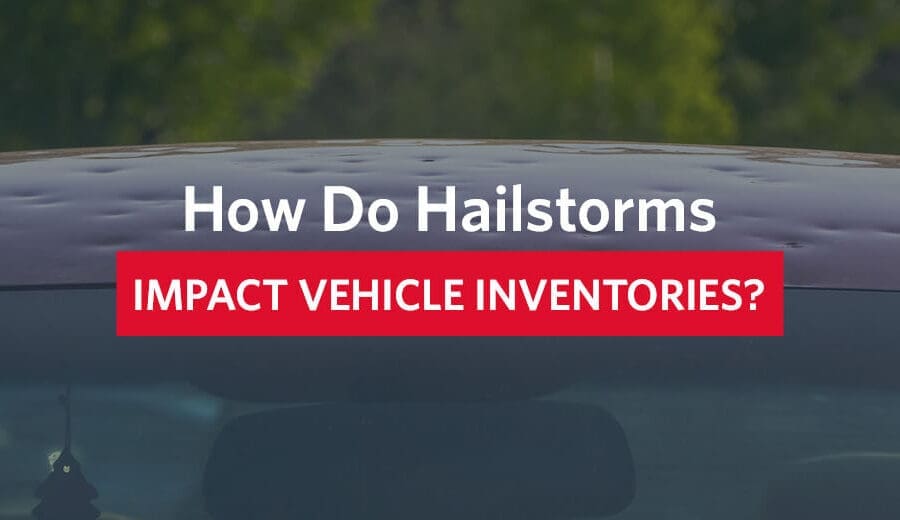
In the U.S., hailstorms cause billions of dollars in insured losses each year. A severe hailstorm can cause dents, broken windows, scratched paint, and even total vehicle loss, devastating inventories for dealerships, manufacturers, and rental agencies. This damage translates to operational downtime and surging insurance premiums.
Fortunately, vehicle protection structures, such as canopies and cantilevers, absorb hail impact. These permanent physical barriers protect cars in hail-prone areas. Discover how shade structures can reduce insurance costs, decrease liability risks, and maintain inventory value during hailstorms.
Hail Risk Data That Affects Inventory Planning
How hailstorms impact vehicle inventories is often measured beyond visible dents. Event frequency, hail size, and storm footprint all influence how quickly dealership hail damage can scale from a handful of vehicles to hundreds. Hailstones in the 1.0 to 1.75 inch range are commonly associated with minor damage, while larger hail can increase the likelihood of broken glass, deeper dents, and more severe body-panel damage.
Wind-driven hail also changes impact angles, increasing exposure on side panels as well as roofs and hoods. These variables make it more challenging to estimate losses quickly after a storm, especially when vehicles differ by trim level, age, repair priority, and sales status across the lot.
Operationally, the largest cost multiplier is volume. A single storm that hits a full lot can overload local body shops, glass vendors, and PDR capacity, extending cycle times and leaving inventory parked in “repair status” rather than on the sales line.
In many markets, repair backlogs following widespread events are measured in weeks, not days, particularly when multiple car dealerships are affected simultaneously. Longer delays can also complicate insurance coordination, loaner availability, sales forecasting, and customer delivery timelines, creating additional pressure on managers trying to restore inventory readiness after a major storm.
Why Physical Coverage Matters for Hailstorm Protection
Weather monitoring and temporary measures may reduce exposure in isolated cases, but they do not provide consistent hailstorm protection for high-volume operations. Permanent overhead systems, including hail canopies, can limit direct impact on vehicle surfaces and reduce the probability that an entire inventory row sustains damage during a single event.
For organizations seeking to protect against hail at scale, coverage strategy often centers on two variables: total stall count and the percentage of inventory stored outdoors during peak seasons. This approach helps decision-makers prioritize the most exposed rows, protect higher-value units first, and plan infrastructure around the areas where hail exposure could create the greatest operational, financial, and customer-facing disruption after a severe weather event.
Decision Framework for Coverage Levels for Vehicle Inventories
Inventory protection planning often aligns coverage with operational priorities:
- Priority coverage: Focus on high-value trims, new arrivals, front-line inventory, and customer-facing rows.
- Operational coverage: Cover service lanes, delivery staging, and reconditioning areas to reduce workflow disruption.
- Mass coverage: Apply broad coverage across large inventory fields when storm exposure and inventory volume justify a site-wide approach.
These tiers help dealerships phase protection investments, match coverage to vehicle value, and prioritize areas where hail exposure would create the greatest financial or operational disruption during peak inventory periods.
KPIs Often Used After Installation
Facilities commonly track post-event outcomes to validate hailstorm protection investments. Typical metrics include the number of damaged vehicles per storm event, average repair cycle time, inventory availability during peak sales periods, and claim frequency trends. These indicators help quantify how infrastructure can protect against hail while supporting inventory continuity and customer experience. Over time, this data can also support insurance discussions, capital planning, and coverage expansion decisions by showing how protected rows perform compared with exposed inventory areas after storms.
The Real-World Cost of Hailstorms on Vehicle Inventories
A single hailstorm can be an extensive financial liability for auto businesses. Companies that assess the scope of the impact can determine which protective measures to take.
Direct Damage
Softball-sized hailstones can fall at speeds over 100 mph. This high-velocity force is enough to damage vehicles beyond repair. From shattered windows to thousands of dents, vehicle inventory may be at risk of significant damage. Exposed surfaces like roofs and hoods are particularly vulnerable to impact.
The intensity of hailstorm damage to vehicles depends on factors like hail size, density, and wind speed. A 2023 study published by Korean researchers warns that climate change has made hail increasingly unstable and challenging to predict. As the threat of hailstone damage increases, uncovered lots risk inventory losses in the coming years.
Financial Impact on Dealerships and Manufacturers
Hailstorms pose further financial risks for auto businesses. According to the Insurance Information Institute, State Farm paid out over $3.5 billion in hail claims in 2022. The top states for hail claims included Minnesota, Texas, Arkansas, Illinois, and Nebraska.
These financial impacts manifest in several ways.
- Repair costs: Severe storms can damage hundreds of vehicles at once, resulting in large-scale repairs. These expenses strain operational budgets.
- Operational downtime: Damaged vehicles often take weeks or months to repair, slowing revenue during peak sales periods.
- Depreciated asset value: Damaged cars may fetch lower resale or trade-in values even after professional repairs, potentially diminishing inventory value and per-transaction profitabilityma.
Supply Chain Disruptions
Hailstorms can harm inventory at critical points in the supply chain. When hundreds of vehicles sustain damage, businesses face inventory bottlenecks and repair backlogs that affect operations.
Damaged inventory becomes unsellable, leaving gaps in available models for months at a time. Service departments may become overwhelmed with backlogs as technicians work to repair dents and replace glass.
This sudden demand for replacements can lead to supply shortages and extended downtime. Transportation networks may also experience weather disruptions, slowing new inventory arrival.
Ways to Protect Vehicle Inventories From Hail
Overhead shades effectively protect inventory from hail damage. These solutions deflect hail impact with rigid metal roofs and high-tension canopy designs, safeguarding vehicles underneath.
Hail protection structures address a range of business needs.
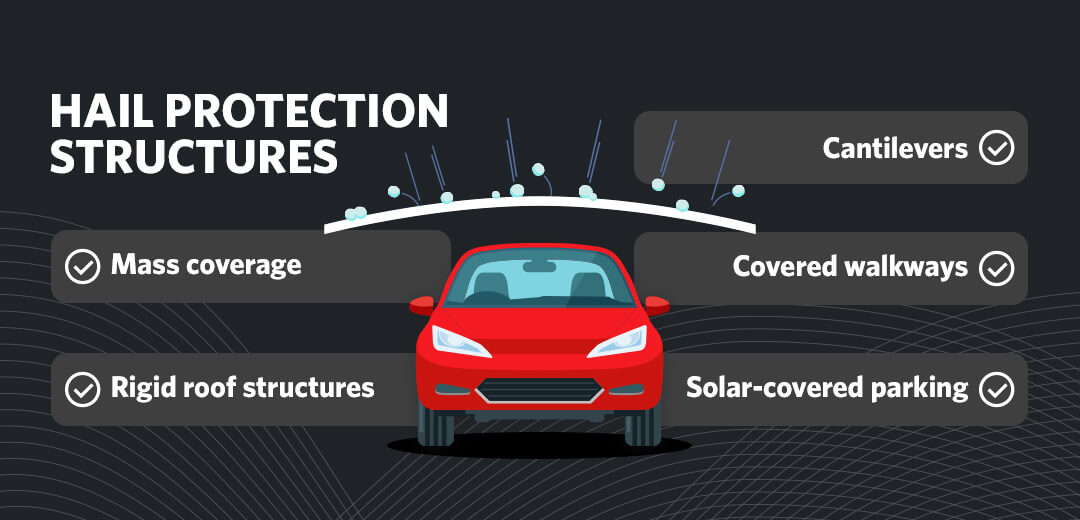
- Mass coverage: These shades provide large-scale coverage for extensive vehicle inventories.
- Rigid roof structures: Rigid structures offer high impact resistance with options like metal, polycarbonate, and high-density polyethylene.
- Cantilevers: These designs offer increased coverage from the elements and make parking lots more maneuverable, with support columns spaced away from parking spaces.
- Covered walkways: Combining parking lot protection with covered walkways helps customers and employees reach facilities safely during storms.
- Solar-covered parking: These solar structures harness solar power to offset energy costs while providing hail protection for cars.
Durable overhead coverings make a substantial difference during hailstorms. Impact-resistant roofing systems can reduce hail risks by 60% to 98%. These coverings use materials like fabric membranes, steel frameworks, and impact-absorbing components designed for hail intensity patterns.
The benefits of vehicle protection structures extend beyond damage prevention. These systems can increase vehicle security, lower insurance premiums, reduce operational disruption, decrease liability risk, and create a safer work environment.
What Do Car Dealerships Do When It Hails?
While temporary solutions such as portable shelters may initially seem cost-effective, they often fail to provide lasting protection for sizable inventories. Individual covers take time to put on, which may not be feasible during hailstorm events. Permanent vehicle shades typically deliver higher ROI through long-term asset protection, insurance savings, and operational uptime.
When it hails, car dealerships and manufacturers should evaluate their risk exposure and determine the ROI of protective infrastructure.
- Hail risk assessment: Mapping the region’s hail-risk history can help determine exposure levels. Evaluate things like how much vehicle inventory remains outdoors, typical vehicle turnover rates, and the feasibility of relocation during severe weather warnings. Conduct a cost-benefit analysis by reviewing current hail insurance coverage terms, exclusions, and deductibles.
- Inventory size: The scale of outdoor vehicle storage directly influences the type and configuration of protective structures. Facilities with hundreds of vehicles require different solutions than smaller operations. Protection strategies should account for peak inventory periods and seasonal fluctuations.
- Visual appeal: Aesthetics are another crucial consideration. While dealership branding and facility design may seem like low priorities, they can create positive customer experiences. Aim to balance functional protection with aesthetic appeal.
- Material type: When evaluating protective infrastructure, businesses should determine lot layout, vehicle volumes, and traffic flow patterns to select appropriate coverage types. These factors can compare the benefits of full canopy systems, specialized netting, or partial coverage solutions.
- Geographic location: Protection structures should account for local hail and wind loads. Look for systems tested for specific impact thresholds, such as golf-ball-sized hail or 120 mph wind resistance.
- Insurance policy changes: After installing a shade, businesses should obtain engineering documentation, maintenance logs, and infrastructure photographs to share with insurance brokers. These materials let carriers reassess risk profiles and negotiate more favorable policy terms.
- Update storm protocols: Include storm-response protocols in operational procedures. For example, designating personnel to monitor weather conditions, establish vehicle positioning standards, and create maintenance schedules for protective structures will maximize protective investments year-round.
- Long-term savings vs. initial investment: Quantify the financial return on hail protection by calculating the avoidable insurance premiums, repair costs, and revenue losses from damaged inventory. Permanent structures often pay for themselves within several years through these combined savings.
Protect Vehicle Inventory With VPS
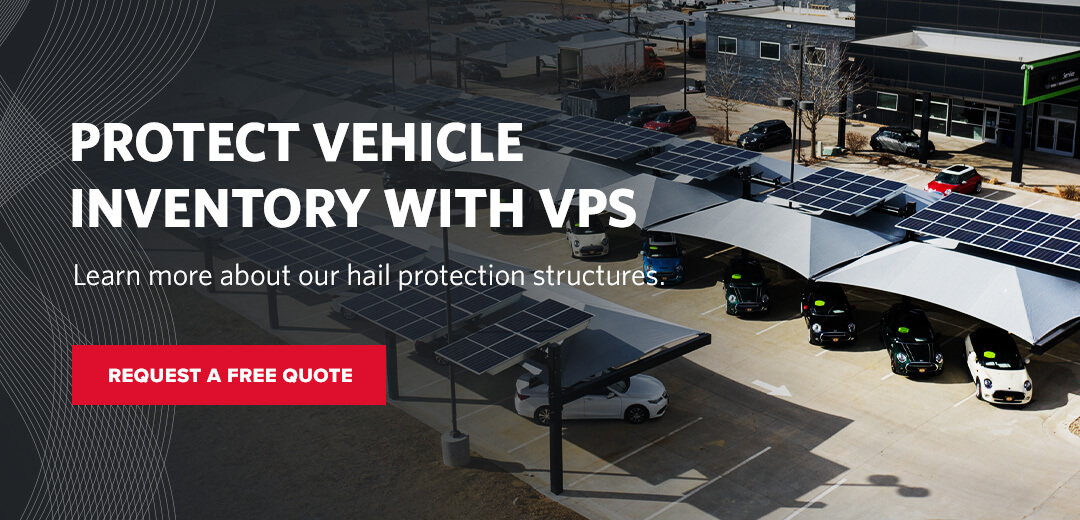
Vehicle protection is nonnegotiable during a hailstorm. Vehicle shades preserve inventory, prevent supply chain disruptions, and improve ROI. VPS offers covered parking solutions for dealerships and rental agencies seeking proven protection.
Our structures represent over 95% of all automotive hail protection worldwide, making us the definitive industry leader in this category. Since 1991, our products have effectively shielded more than 120,000 vehicles.
We combine cutting-edge technology with industry expertise to deliver custom solutions. Our process considers unique business needs, from initial design through engineering, fabrication, and construction. Learn more about our hail protection structures by contacting us today to request a free quote.