Government fleet managers encounter complex threats daily, ranging from environmental extremes and security breaches to simple operational wear and tear. Failure to address these risks can lead to costly repairs, compromised services, and wasted public funds. This article serves as a comprehensive guide, providing actionable tips to help agencies protect their government fleet assets.
Common Threats to Government Vehicle Fleets
Before any protective action can be effective, it’s crucial to understand the scope of threats facing government fleets. Awareness of these risks allows agencies to proactively design solutions that address their most pressing vulnerabilities. The most common threats to local government fleet management include:
- Environmental factors: Weather is often an overlooked, yet critical, adversary. Prolonged sun exposure causes paint to fade and upholstery to crack, diminishing vehicle appearance and resale value. Harmful UV rays degrade dashboard materials and electronic components inside, while extreme heat warps tires and accelerates battery wear. Seasonal threats such as hail, ice, and heavy rain can dent vehicle bodies, shatter windshields, and cause water damage to sensitive areas. Without adequate protection, these issues translate into higher repair costs and reduced vehicle lifespan.
- Vandalism and theft: Unfortunately, government vehicles are sometimes the target of intentional harm or opportunistic crimes. Vandalism may include graffiti, broken windows, or slashed tires, eroding public trust and draining resources for repairs. Larger fleets are particularly vulnerable to break-ins and theft, whether of entire vehicles or of expensive equipment stored within them.
- Operational wear and tear: Daily use puts a predictable strain on vehicles. However, neglecting routine care magnifies the damage. Worn tires and neglected fluids can trigger breakdowns at critical moments, while small mechanical problems may escalate if unnoticed. Over time, insufficient maintenance reduces reliability and endangers operators and the public, possibly leading to unexpected downtime that disrupts vital services.
Protection From Extreme Weather Conditions
Of all the threats to government vehicle fleets, weather is both the most consistent and the hardest to control. However, agencies can take significant steps to mitigate the impact and keep their vehicles in optimal condition.
- Hail and heavy precipitation: Hailstorms are notorious for causing significant and sometimes irreparable damage to vehicle exteriors. Dented metal panels, chipped paint, and shattered glass can sideline a vehicle instantly. Similarly, heavy rain poses a risk of water leaks and corrosion, especially if vehicles are parked in low-lying or poorly drained areas. Ensuring adequate physical coverage for fleets can help avoid both cosmetic and functional damage.
- High winds and debris: Strong winds during storms can hurl debris, tree limbs, and small objects into parked vehicles. Even minor impacts may lead to costly repairs or, worse, take vehicles out of commission during emergencies. Regular assessment of parking environments and mitigation measures, such as covered structures or barriers, is an essential step in risk reduction.
- Extreme temperatures: Both excessive heat and extreme cold can wreak havoc on government fleets. High temperatures accelerate wear on dashboards, interior materials, and sensitive electronics, sometimes causing malfunction or early failure. Batteries are particularly prone to heat-related stress, losing charge capacity and potentially failing without warning. Conversely, cold weather increases engine strain and makes batteries less efficient, while also causing fluids to thicken, which impedes critical vehicle systems. Taking steps against extreme temperatures ensures better fleet readiness year-round.
Physical Structures for Government Fleet Management
Covered parking structures can extend the life of vehicles and external equipment by protecting them against the sun, hail, and heat. Durable and customizable structures can also complement facilities while protecting vehicles from the elements.
Fleet managers can find covered parking structures made of several high-quality materials, including metal, engineered fabric, and polycarbonate. Depending on the facility’s unique needs and local climate, teams can find solutions to address specific weather-related concerns. For example, tensile membrane structures are ideal for waterproofing, while metal roofs offer long-term protection with minimal degradation over time.
For maximum protection, fully enclosed garages nearly eliminate risks from weather and vandalism. These facilities offer unparalleled security and climate control but come with higher construction and maintenance costs. Most agencies benefit from a combined approach, such as using outdoor shade structures for the majority of their fleet, with enclosed storage reserved for high-value or specialty vehicles.
Security Measures Against Theft and Vandalism
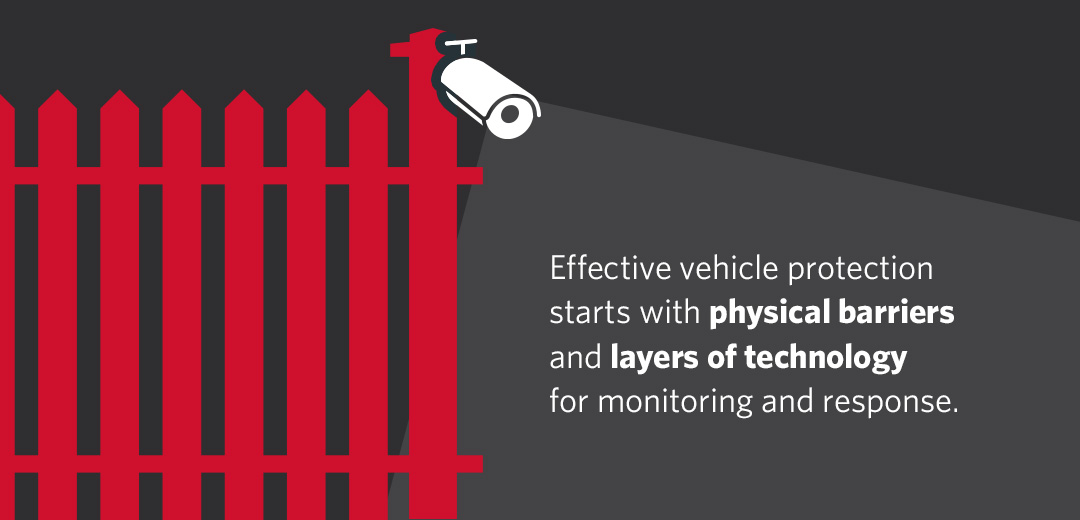
Security is critical for any government fleet management strategy. Effective vehicle protection starts with physical barriers and layers of technology for monitoring and response. Focus on creating a secure perimeter and monitoring the fleet with:
- Fencing and gates: A sturdy, well-maintained perimeter fence is essential for protecting a government fleet. Automated gates that require card access or security codes can keep unauthorized visitors out and provide an audit trail of who enters and exits. Regular inspection and prompt repair of these barriers reduces weak points that thieves or vandals could exploit.
- Lighting and surveillance: Powerful, strategically placed lighting deters after-hours criminal activity and increases the effectiveness of security cameras. Well-lit areas also make it easier for staff to secure vehicles at night. Modern surveillance systems, especially those with high-definition, motion-activated cameras, create a strong deterrent by both recording activity and making would-be criminals think twice. Clearly visible security signs and frequent camera checks reinforce the impression of robust monitoring.
- Alarm systems and GPS tracking: Sophisticated alarm systems can alert authorities or security personnel instantly in case of unauthorized intrusion. For the highest level of protection, GPS tracking devices installed in vehicles facilitate immediate recovery in the event of theft, significantly reducing losses and increasing the likelihood of locating stolen assets quickly. As part of a government fleet management program, these technologies help agencies maintain operational readiness and demonstrate due diligence in safeguarding public resources.
Maintenance and Operational Best Practices for Municipal Fleet Management
Scheduled inspections and maintenance are the first defense against costly breakdowns. By adhering to a preventive maintenance schedule, agencies can extend the lifespan of each vehicle and minimize sudden failures that disrupt public service delivery.
Various vehicle types will require specific maintenance needs and frequencies. For example, emergency vehicles like ambulances often encounter aggressive usage and require more frequent maintenance intervals. For these vehicles, it’s vital to monitor brakes, tires, batteries, and emergency lighting weekly, in addition to following manufacturer schedules for fluids, engine checks, and electronics testing. Alternatively, service and utility vehicles often handle heavy loads and face tough work environments. These vehicles require frequent lubrication, undercarriage checks for corrosion, and periodic review of hydraulics or lift equipment.
Regardless of vehicle type and usage patterns, there are several core maintenance actions that every fleet manager should implement:
- Scheduled inspections: Adopt a routine schedule that considers both mileage and elapsed time for checks. Include multipoint inspections that cover brakes, lights, wipers, and horn function.
- Fluid and oil checks: Regularly inspect and replace engine oil, coolant, brake fluid, and transmission fluids. Timely fluid changes keep all moving parts running efficiently and help prevent overheating or system failures.
- Tire maintenance: Monitor tire pressure, tread depth, and alignment frequently. Uneven or excessive wear can reduce safety and signal issues with suspension or usage patterns that need adjustment.
- Battery and electrical system checks: Particularly in climates with temperature extremes, test battery charge and inspect all electronics, from radios to onboard computers and safety systems.
- Special equipment verification: For vehicles with additional features, such as sirens, light bars, communication devices, or hydraulic lifts, include monthly function tests in inspection routines. Immediate repair or replacement of faulty equipment ensures frontline readiness.
- Corrosion and body inspection: Especially in areas with snow, rain, or coastal climates, check for rust and corrosion on frames, undercarriages, and connection points. Addressing surface rust early can prevent structural damage.
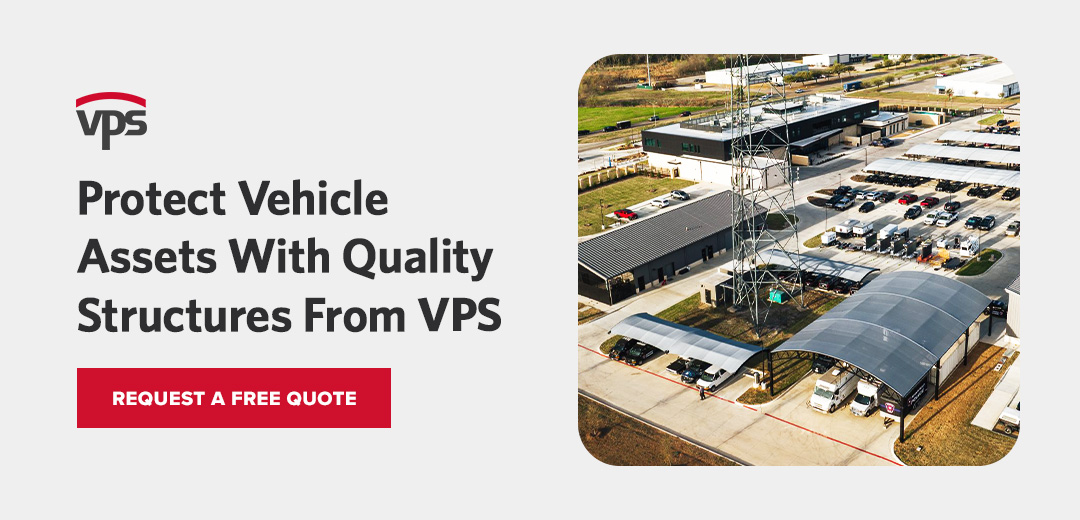
Protect Vehicle Assets With Quality Structures From VPS
Government vehicle fleets are mission-critical assets that demand robust protection from environmental hazards, crime, and daily operational stress. VPS is a leader in vehicle protection structures. Agencies seeking to enhance their physical protection against environmental threats can rely on VPS to deliver durable and effective solutions. Get started with your protective structure by requesting a quote.