

A vehicle shade structure can shape your space’s functionality and aesthetic appeal. Modern materials engineered to provide superior waterproof protection present possibilities far beyond conventional designs. By thoughtfully considering the distinctive benefits each solution offers, you can safeguard your property and those within from the elements, while harmonizing with your site’s visual character. The result is a lasting, stylish shelter that delivers enduring value and elevates your environment.
What Are the Best Waterproof Materials for Vehicle Shade Structures?
The answer to this question varies based on your goals, budget, and climate. Each material offers unique strengths, and selecting the ideal option requires considering your project’s specific needs.
Instead of choosing a cookie-cutter solution that doesn’t account for the whole picture, weigh several factors that influence which material will outperform others.
- Climate and weather exposure: Consider the amount of rainfall, humidity, and sun exposure in your area. Materials that excel in one climate may not be as effective in another.
- Durability requirements: Some locations demand materials that can withstand heavy winds, storms, or even snow. Material longevity can directly impact long-term value.
- Aesthetic preferences: Visual appeal is often a deciding factor, especially if the structure is visible from the street or integrated into existing architecture.
- Maintenance needs: Some waterproof materials require regular cleaning or recoating for optimal performance, while others are nearly maintenance-free.
- Budget constraints: Material costs and installation expenses can vary widely. Factor in up-front and long-term costs to balance quality with affordability.
- Environmental considerations: Sustainability practices and eco-friendly installation may be priorities for responsibly minded businesses or projects.
A Look at the Pros and Cons of Different Shade Structure Materials
Choosing a durable, waterproof material for your residential carport, commercial lot, or outdoor showrooms is essential. Rain, humidity, and other environmental factors can quickly damage unprotected structures, putting vehicles at risk. Three material categories are notable for their durability and waterproofing capabilities.
- Fabric
- Metal
- Polycarbonate panels
Each of these materials approaches waterproofing uniquely, with distinct advantages and considerations that vary based on climate, cost, and aesthetics. Understanding their inherent properties makes it simpler to choose the ideal solution for long-lasting vehicle protection.
Quick Comparison for Best Waterproof Materials
For projects evaluating the best waterproof materials for commercial canopies, lots, and covered inventory areas, decision-makers often want side-by-side comparisons that can support early budgeting. Costs are typically quote-based and vary with span, engineering loads, foundations, and finish selections. Many projects use planning ranges for installed roof systems (material plus supporting structure) to compare options and narrow the scope.
A practical comparison also includes lifecycle considerations. A roof system with a higher initial cost per square foot may pencil out more favorably if it reduces recoating cycles, minimizes panel replacement, or limits repair downtime. Material selection can also influence design efficiency: longer spans, fewer columns, and better drainage control can affect the total structure footprint and the number of foundations required, which can shift the installed cost profile beyond the roof material alone.
Wind exposure and storm intensity are equally important. Many commercial sites require engineered systems designed to local building codes for wind speed, uplift, and, in some regions, snow loading. Maintenance planning should account for inspection intervals, cleaning access, and the likelihood of cosmetic wear in high-dust, high-pollen, coastal salt-air, or industrial environments. These factors help align waterproofing decisions with long-term performance expectations for waterproof vehicle shade structures.
| Material Category | Planning Lifespan Range | Relative Planning Cost | Wind/Weather Notes | Maintenance Considerations |
|---|---|---|---|---|
| Engineered Waterproof Fabric (e.g., PVC, PTFE, ETFE) | ~15–25+ years (system dependent) | Often modeled as moderate per sq. ft. versus rigid roofs | Engineered designs may meet high wind requirements with proper anchoring | Periodic cleaning, tension checks, and inspection for punctures |
| Metal Roof (galvanized steel or aluminum) | ~25–40+ years (coating and environment dependent) | Often modeled as higher per sq. ft. for robust, long-life systems | Strong performance in storm-prone regions when designed to code | Routine inspection for fasteners, coatings, and corrosion points |
| Polycarbonate Panels | ~10–20+ years (panel type and UV protection dependent) | Often modeled as moderate, with variability by thickness and finish | Impact resistant, though the design must account for thermal expansion | Cleaning for clarity, inspection for scratches, and seal integrity |
Climate-Based Recommendations for Waterproof Vehicle Shade Structures
Climate is one of the most decisive filters when selecting waterproof vehicle shade structures. In high-UV, high-heat regions, reflective fabrics and finishes can help reduce heat loading under the canopy while maintaining waterproof performance.
In coastal and industrial environments, corrosion resistance often becomes a priority, influencing metal selection, protective coatings, and fastener specifications. In snow regions, engineering for vertical loads and drainage control plays a larger role in material and geometry selection, while high-wind zones may prioritize structural anchoring, span strategy, and code-aligned testing criteria.
For a closer look at waterproof canopy options and applications, explore VPS waterproof structure options.
Understanding Fabric Waterproof Shade Structures
Unlike standard fabrics that may only offer water resistance, canopy fabrics made with engineered materials like PTFE, PVC, and ETFE are fully waterproof, forming an impermeable barrier that keeps vehicles and the area underneath dry, even during heavy rain.
These waterproof shade options offer several benefits.
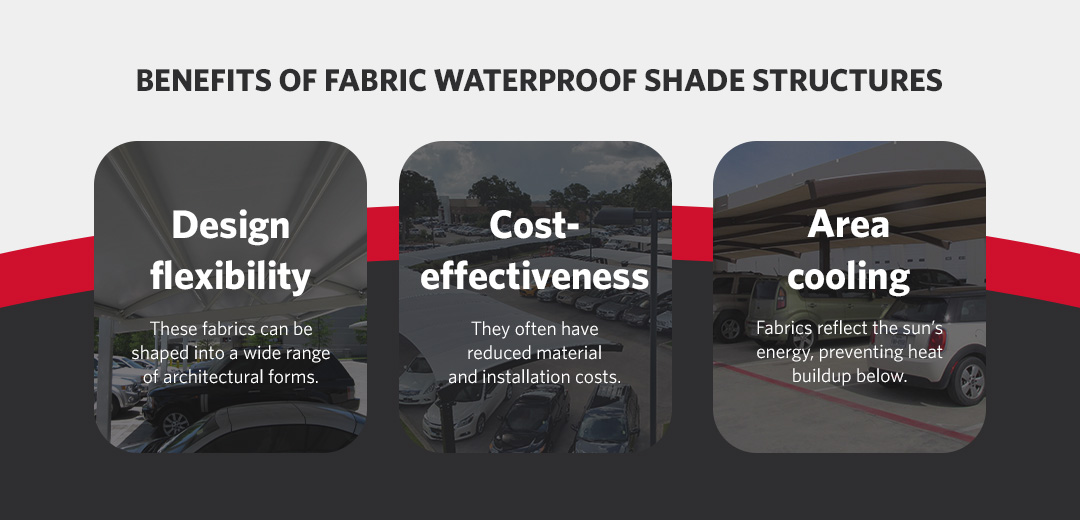
- Design flexibility: Manufacturers can tension and shape these fabrics into a wide range of unique, eye-catching architectural forms. This flexibility lets you create customized structures that complement any surrounding architecture or landscape.
- Cost-effectiveness: Compared to solid roofing materials like metal or polycarbonate, waterproof tensioned fabrics often have reduced material and installation costs. The balance of durability and affordability makes them a popular choice for small projects and expansive commercial installations.
- Area cooling: Advanced architectural fabrics reflect a significant portion of the sun’s energy, preventing heat buildup below. Fabric canopies maintain noticeably cooler temperatures for vehicles and people underneath, making them a practical choice for shaded parking or outdoor gathering spaces, especially in hot and sunny climates.
However, there are considerations to note. These fabrics require routine cleaning and inspection to preserve their waterproof performance and appearance. They can also be vulnerable to punctures or tears from falling branches or sharp objects.
The Pros and Cons of a Metal Shade Structure
Metal shade solutions are the most traditional and robust option for vehicle protection, long recognized for their exceptional strength and durability. Typically constructed from materials like galvanized steel or aluminum, these structures withstand harsh weather, including heavy rain, high winds, and even hail, ensuring reliable waterproof protection year-round.
- Longevity: Metal structures boast an impressive lifespan due to their inherent resistance to rot, pests, and UV degradation. With proper installation and corrosion-resistant coatings, they can provide decades of reliable coverage for vehicles with minimal degradation over time.
- Durability: Metals excel at withstanding physical impacts and extreme weather. Their rugged nature means they’re less vulnerable to tears or punctures, making them an especially resilient choice in storm-prone or high-traffic environments.
- Low maintenance: After installation, metal shade structures typically require minimal ongoing upkeep beyond the occasional inspection for rust or loose fasteners.
However, there are crucial considerations. Metal structures tend to allow for fewer sculpted or custom shapes compared to fabric membranes. They also generally require a higher initial investment. Additionally, metal roofs can amplify the sound of rainfall or hail, resulting in a noticeably louder interior during storms.
Why Consider Polycarbonate Shade Structures?
Polycarbonate is a high-impact, rigid thermoplastic that has become an increasingly popular choice for vehicle shade structures. Polycarbonate panels provide solid, translucent coverage that blocks rain while allowing sunlight to filter through, creating a bright and inviting environment underneath.
- Allows natural light: While most roofing materials are opaque, polycarbonate panels let daylight pass through, creating a bright, open feel. Polycarbonate is ideal for carports or structures where visibility and aesthetics matter.
- Exceptional impact resistance: Polycarbonate stands out for its ability to withstand impacts from hail, debris, or accidental bumps. It is far less prone to cracking or shattering than glass, making it a reliable choice for long-term durability in demanding outdoor environments.
- Lightweight: These panels are much lighter than glass or metal, making them easier to handle, transport, and install. They can reduce the demands placed on supporting structures and foundations.
Despite these advantages, polycarbonate also has noteworthy drawbacks. The surface can be vulnerable to scratches without proper care, and its transparency may lead to heat buildup below on hot days. Additionally, polycarbonate can expand and contract with temperature changes, which installers must account for to avoid future warping or buckling.
How to Choose the Best Material for Shade
Choosing the ideal material for your shade structure involves more than picking the most affordable or aesthetically pleasing option. A thoughtful approach ensures your investment delivers maximum value and protection.
- Prioritize your goals: Narrow down your options by defining your must-haves. Are you aiming for a striking architectural statement, maximum durability, or minimal maintenance?
- Assess your business climate: Next, assess the unique environmental conditions in your location. Do you need materials that can withstand frequent storms, extreme heat, or heavy snowfall? For example, a structure in a hot, sunny region may benefit more from cooling fabrics or light-filtering polycarbonate, while coastal or high-wind areas might require the uncompromising strength of metal.
- Evaluate long-term vs. up-front costs: Finally, balance long-term value against up-front costs. While some solutions may require a significant initial investment, their durability and lower maintenance could reward you with lifetime savings. Weighing these factors together ensures you choose a shade material tailored for lasting performance and maximum return on investment in your specific situation.
Design Your Shade Structure With Waterproof Materials
VPS has over 30 years of experience designing structures to protect business assets. As a leader in our industry, we provide unmatched service, quality, and peace of mind. Our customizable products can meet your waterproofing needs while complementing your existing structures or landscape. Request a free quote and start safeguarding your business.