The parking industry is undergoing its most dramatic transformation in decades. The simple concept of vehicle storage has evolved into sophisticated infrastructure that generates revenue, protects assets, and enriches user experiences. The latest trends in parking lot designs in 2026 reflect this fundamental shift, with facility managers and architects leading the charge toward innovative, sustainable solutions.
1. From Storage to Experience
Traditional parking lots are becoming obsolete, giving way to dynamic mobility hubs that serve multiple purposes beyond vehicle storage. This development represents a strategic shift in which parking becomes a competitive advantage instead of a necessary expense.
The concept of parking as a pacesetter for technological change has gained traction in the industry. Parking facilities now serve as testing grounds, demonstrating how civic infrastructure can adapt to meet changing urban needs. Facility managers who embrace this transformation will position their properties at the forefront of innovation while creating new revenue streams.
Commercial real estate developers recognize that parking lot design directly impacts property value and tenant satisfaction. The most successful facilities integrate technology, sustainability, and user experience into cohesive systems that benefit operators and users.
2. Smart Parking Technology and Digital Integration
The invisible technology infrastructure defining modern parking facilities operates behind the scenes to eliminate common frustrations. Real-time data collection and analysis have become essential for effective facility management, reducing operational costs while improving user satisfaction.
About 30% of urban congestion stems from drivers searching for available parking spaces. This inefficiency costs U.S. cities an estimated $74 billion annually in lost productivity and increased emissions. Smart parking systems address this challenge by guiding users directly to available spaces through mobile applications and digital signage.
IoT Sensors and Real-Time Data Analytics
Internet of Things sensors embedded throughout parking facilities continuously monitor space availability, vehicle flow patterns, and usage trends. This data allows facility managers to optimize pricing, predict peak demand periods, and identify maintenance needs before problems occur.
Advanced analytics platforms process this information to generate actionable insights. Facility operators can adjust staffing levels, modify pricing structures, and improve traffic flow based on real usage patterns rather than assumptions.
Automated Entry and Contactless Payment Systems
Contactless payment systems have moved beyond simple convenience features to essential infrastructure. License plate recognition eliminates the need for physical tickets, while mobile payment integration streamlines the entire parking experience.
These systems reduce operational overhead by minimizing staff requirements and providing detailed transaction data for revenue optimization. Automated entry and exit processes also improve traffic flow, reducing congestion at facility entrances and exits.
3. Sustainable Solutions and Green Infrastructure
Environmental responsibility and operational efficiency converge in modern parking facility design. Parking lot trends increasingly emphasize revenue-generating solutions that also support sustainability goals, creating win-win scenarios for facility operators and their communities.
Integrating green infrastructure solves multiple challenges simultaneously. Sustainable design elements reduce environmental impact, lower operating costs, and often qualify for tax incentives or regulatory credits.
Solar Panel Integration for Revenue Generation
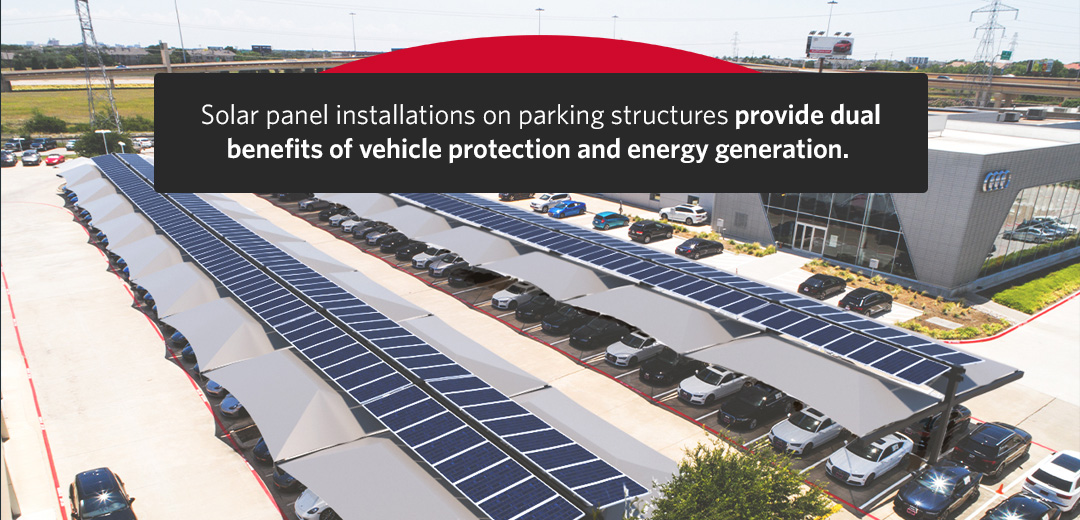
Solar panel installations on parking structures provide dual benefits of vehicle protection and energy generation. These systems can offset facility energy costs while potentially generating surplus power for sale back to the grid.
The combination of shade and energy generation makes solar integration particularly attractive for commercial facilities. Vehicle protection against UV damage and extreme temperatures adds measurable value for users, and energy production creates an ongoing revenue stream.
The Expansion of EV Charging Infrastructure
Electric vehicle charging infrastructure has become a standard expectation rather than a premium amenity. Fleet electrification trends indicate that charging capabilities will be essential for commercial facilities serving business customers.
Advanced electronics and software solutions allow facilities to scale EV charging efficiently. Smart charging systems can balance power loads, optimize charging schedules, and mesh with renewable energy sources to maximize cost-effectiveness.
Landscaping and Permeable Surfaces
Permeable paving materials and strategic landscaping manage stormwater runoff and reduce heat island effects, addressing regulatory requirements while creating more comfortable environments for users.
Native plant installations require minimal maintenance and enhance local ecosystems. Rain gardens and bioswales can naturally integrate into facility design to manage water flow while enhancing visual appeal.
4. User-Friendly Design Elements
The human element remains central to effective parking facility design. Safety, comfort, and accessibility features impact user satisfaction and facility reputation. Modern design standards prioritize these elements as essential infrastructure instead of optional upgrades.
First responders such as emergency medical services, fire and police departments recognize that vehicle protection impacts response times and operational effectiveness during critical situations. As a result, they have pioneered user-centered parking design by implementing covered structures that protect vehicles and other high-value equipment from weather damage.
Commercial facilities are now adopting similar protection-focused approaches as best practices for fleet management and asset preservation.
Enhanced Lighting and Safety Protocols
Strategic lighting design improves safety and perceived security throughout parking facilities. LED technology enables efficient, customizable lighting solutions that adapt to different usage patterns and conditions.
Security features integrated with lighting systems provide comprehensive coverage without creating obvious surveillance infrastructure. Motion-activated lighting reduces energy consumption while maintaining safety standards during off-peak hours.
Accessibility and Inclusive Mobility Standards
Accessibility standards extend beyond minimum compliance requirements to create genuinely inclusive environments. Wide spaces, clear signage, and barrier-free pathways accommodate diverse mobility needs.
Universal design principles benefit all users while ensuring compliance with accessibility regulations. Facilities designed with inclusive mobility in mind often experience higher satisfaction scores across all user groups.
Advanced Shade Structures for Climate Resilience
Climate resilience has become a critical consideration as extreme weather events become more frequent and severe. Advanced shade structures protect vehicles and users from intense heat, UV radiation, and severe weather, including hail.
The new standard in parking shade solutions integrates multiple functions beyond basic weather protection. These structures can support lighting systems, security features, and renewable energy installations while providing comprehensive coverage for large areas.
VPS Shade Structures in 2026 Design
VPS shade structures represent the physical infrastructure that enables many 2026 parking trends to function effectively.
Solar-Ready Cantilever Designs for Commercial Spaces
Cantilever shade structures optimize parking lot design by maximizing space and providing robust support for solar panel installations. Their architectural flexibility enables custom configurations that complement existing facility design. Commercial spaces benefit from these structures’ clean lines and modern appearance. They also gain functional advantages in space optimization and energy generation.
Mass Coverage for Large-Scale Asset Protection
Large-scale facilities like airports, automotive dealerships, and distribution centers require comprehensive protection solutions that can efficiently cover vast areas. Mass coverage systems provide continuous protection while maintaining cost-effectiveness.
These protect valuable assets from hail damage, UV degradation, and extreme temperature fluctuations. The asset protection value often justifies the investment by reducing insurance costs and extending vehicle life, particularly for commercial fleets and high-value inventory.
Future-Proof Facilities With VPS
The transformation of parking facilities from simple storage areas to sophisticated mobility hubs is one of the most significant infrastructure evolutions of our time. Facility managers and architects who embrace these changes position their properties for long-term success while meeting user expectations and regulatory requirements.
VPS shade structures provide the physical foundation that enables many of these advanced features. By integrating solar-ready designs, advanced weather protection, and scalable coverage solutions, VPS empowers facility operators to future-proof their investments while generating immediate operational benefits.
These 2026 parking lot design trends reflect broader shifts toward sustainability, technology integration, and user-centered design. Contact us today to discover how facilities that incorporate these elements today can lead tomorrow. Now is the time to give yourself competitive advantages that extend far beyond providing a place to park.