Parking lots absorb and trap sunlight throughout the day. One commercial lot can reradiate enough heat to increase the air temperature across nearby buildings and surrounding walking areas. Heat will continue rising across unshaded properties, making time outside uncomfortable and even dangerous.
Prolonged sun exposure can also speed asphalt deterioration, leading to cracking that shortens the pavement’s lifespan. Your business may pay higher maintenance costs when damaged pavement needs premature repair or replacement.
A parking lot shade structure can reduce heat buildup by blocking direct sunlight before it reaches the pavement’s surface.
The Importance of Parking Lot Shade
Parking lot shade affects how an area feels during high-temperature periods. A shade structure helps control how much sun and radiant heat people experience when entering or leaving a building. The amount of direct sun and surface heat determines whether the parking area stays usable during the hottest part of the day and peak summer months.
By reducing the time a person spends in direct sun when moving between their vehicle and building entrances, shade parking lots improve comfort and support safer movement. They also limit sun damage to visible assets, maintaining clear navigation and reducing heat strain on electric vehicle chargers for stable charging performance.
Well-shaded parking lots have multiple benefits.
- Vehicle protection: Continuous shade coverage reduces ultraviolet exposure that may lead to paint fading or interior cracking.
- Reduced heat island effect: Overhead shade structures lower surface temperatures and decrease surrounding heat.
- Enhanced customer experience: Covered parking areas create a more comfortable arrival experience, encouraging longer visits.
- Infrastructure protection: Coverage over traffic markings and signs decelerates surface fading that can reduce navigational visibility.
- EV charging efficiency: Protection above charging stations maintains operating temperatures that encourage consistent charging performance.
Types of Parking Lot Shade Solutions
Shade parking lot solutions can include natural tree canopies, tensioned fabric shade sails, engineered metal structures, and solar panel-covered parking. Each option differs in durability, coverage area, and whether it provides only shade or has a dual function, like producing on-site power.
Natural Shade
Tree canopies and strategic landscaping provide natural overhead coverage across parking rows. Dense foliage blocks direct sunlight before it reaches vehicles and pedestrian paths, reducing surface temperatures beneath the canopy. Consistent tree placement can soften wide paved areas and help the property feel more integrated with nature.
Fabric Shade Sails
Fabric shade sails use tensioned membranes anchored to steel frames to create defined sun protection zones. High-density polyethylene fabrics can block harmful UV radiation, reducing exposure for people and vehicles. The breathable weave allows hot air to rise through the material, which prevents heat buildup. The color selections reinforce the property’s visual identity without adding structural mass.
Engineered Shade Structures
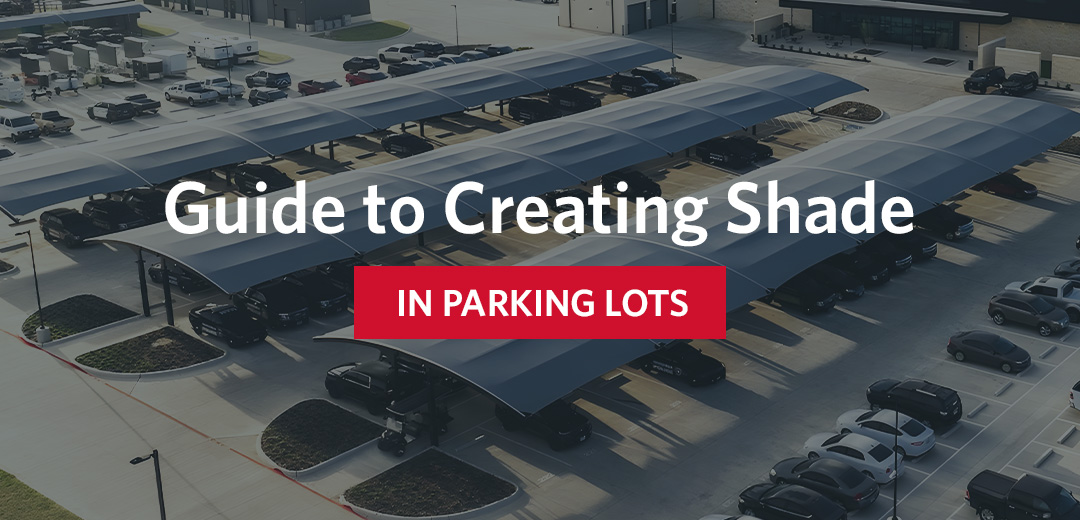
Permanent steel or aluminum framing provides fuller overhead coverage across parking rows. Continuous roofing spans multiple stalls, providing consistent shade without gaps between vehicles. Their structural designs account for high wind speeds and heavy snow loads in demanding climates, protecting the entire covered area.
Cantilevered configurations place support columns along the perimeter, removing interior obstructions and preserving open drive lanes. Galvanized finishes and industrial coatings protect steel framing from corrosion.
Solar Panel-Covered Parking
Overhead solar panel structures provide shade and generate on-site electricity. Dedicated steel carports support panel arrays as the primary roof surface across parking rows. Integrated systems combine stretched fabric or metal canopies with mounted photovoltaic panels to add energy production above the shade layer.
When paired with battery storage, these installations can supply backup power that meets EV charging demand.
Factors to Consider When Choosing a Shade Solution
Choosing a shade structure solution requires evaluating the site’s environmental and operational conditions. Local climate patterns, sun intensity, and wind exposure influence the structural and material requirements.
Evaluate daily traffic volume, parking layout, and maintenance capacity to determine the appropriate shade structure solution. Weigh the initial capital investment against code compliance and these long-term operational objectives.
Evaluating Up-Front Cost vs. Long-Term Value
Costs vary across different shade structure solutions and depend on materials and span width. Tree-based shade requires less capital but involves ongoing pruning and irrigation costs. Fabric canopies need moderate up-front funding and periodic tension maintenance.
Full-coverage steel structures cost more but can reduce restriping cycles and extend pavement life. Solar-covered parking requires the highest investment, but the electricity it produces can offset energy bills over time.
Climate and Weather Considerations
Climate and weather resistance determine whether a shade structure can withstand environmental demands. High heat places stress on roofing materials and connection points. Forceful winds create uplift that can test anchoring systems and foundation depth.
In colder conditions, accumulated snow adds a vertical load, which is an additional design factor. Material durability and connection strength support structural reliability under changing seasonal extremes.
Aesthetics and Brand Image
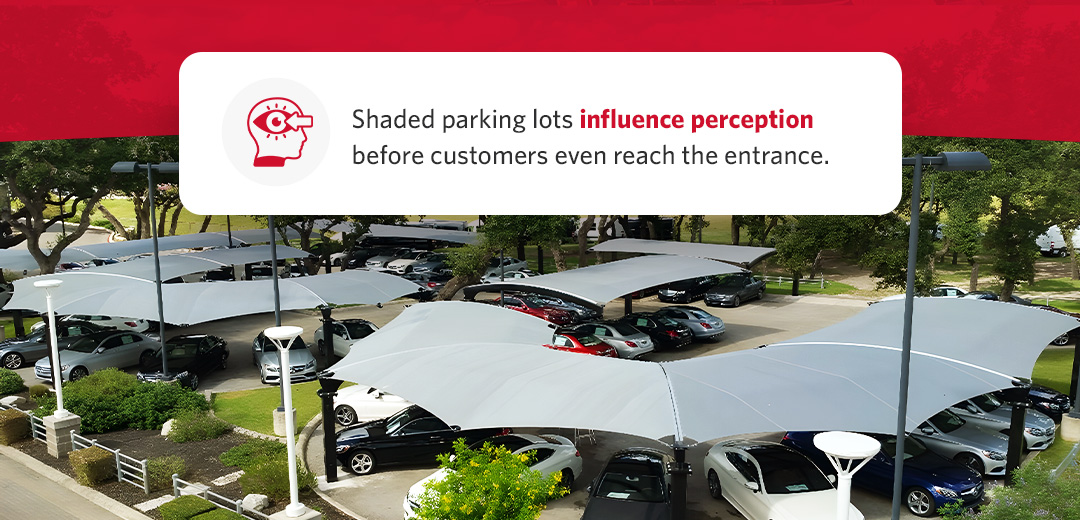
Shaded parking lots influence perception before customers even reach the entrance. Coordinated colors and structural forms should align with existing building facades to create visual continuity across the property.
Clean detailing and durable materials enhance the property’s appearance, giving it a lasting, high-quality look. Proper placement ensures storefront signage remains visible and can preserve unobstructed sight lines for security cameras and access points.
Maintenance Requirements
Maintenance planning affects long-term operating costs and the reliability of shade structures. Fabric sails need periodic washing and tension adjustments to maintain structural stability and consistent coverage across the parking rows.
Tree-based shade will need ongoing canopy management and seasonal trimming to maintain consistent coverage. Permanent steel installations require annual inspection of bolts and welds to remain compliant with safety standards and structural permits, particularly for wind and snow loads.
Permitting and Zoning
Installing parking lot shade requires compliance with local building codes and zoning regulations. Most jurisdictions enforce setback requirements, height limits, and structural load standards that may affect design and placement.
Permit approval often depends on stamped engineering drawings and site plans. A knowledgeable professional can guide you through review timelines and inspection requirements before manufacturing and installation.
Parking Lot Shade Planning and Design
Planning shade parking lots extends beyond appearance and focuses on asset protection and microclimate control. Coverage strategy should balance ultraviolet protection with measurable heat reduction. Structural placement needs to support safe vehicle movement and clear pedestrian circulation, thereby adding practical value to the property.
Include the following elements in your planning.
- Traffic flow analysis: Map vehicle circulation and pedestrian routes to position columns without creating blind spots or traffic congestion.
- Underground utility mapping: Locate buried water, gas, and electrical lines to establish safe zones for structural footings.
- Sun path orientation: Study daily solar movement to position coverage over occupied parking spaces during peak heat hours.
- Vehicle clearance height: Set minimum vertical clearance to accommodate passenger vehicles, delivery trucks, and emergency access vehicles.
- Angle and span calculations: Engineer the roof tilt and span width to maximize shaded area during seasonal sun shifts.
- Foundation engineering: Design footing depth and reinforcement based on soil reports to resist wind uplift and structural load demands.
- Code and permit compliance: Verify zoning alignment, accessibility standards, and structural code requirements before installation approval.
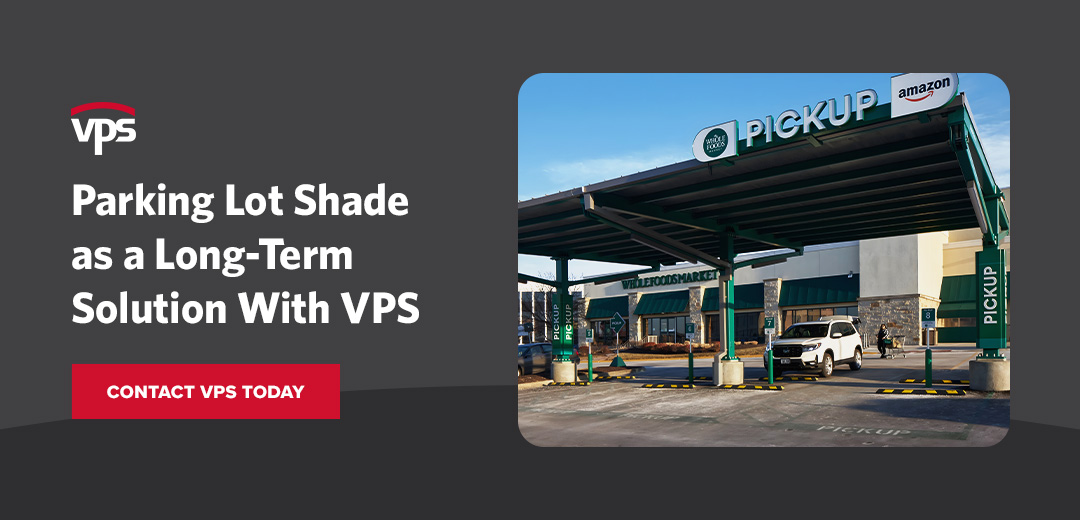
Parking Lot Shade as a Long-Term Solution With VPS
The parking lot often becomes the first and last impression of a property, but open areas offer little defense against sustained sun exposure and extreme surface heat. High temperatures can limit usability during peak hours and create inconsistent conditions across the location. Without overhead coverage, parking areas either operate at minimum capacity during the hottest parts of the year or become unpleasant to use.
VPS approaches shade structures as engineered infrastructure rather than an add-on feature. Through cantilevered designs, full-span coverage, and code-aligned installation, VPS delivers systems built for structural reliability and long-term performance. enhance the property’s appearance for a parking lot shade plan that enhances your location’s functionality and supports year-round usability.