Police officers frequently put themselves in danger to protect citizens from illegal activity. According to FBI statistics, fatal violence against law enforcement increased from 2023 to 2024. Most of the danger that police officers face happens in the field, with firearms as the leading cause of death.
Because of the nature of their jobs, police officers may also be targeted while entering and exiting police facilities. Secure parking is an essential part of police facility design, offering an additional layer of protection for officers on the job. It can also protect costly police vehicles from weather damage.
Learn more about the best design practices for secure police parking.
The Importance of Secure Police Parking Design
Police departments can experience many issues and risks in their parking lots, including:
- Vandalism and arson.
- Equipment theft.
- Vehicle-ramming attempts.
- Perimeter breaches.
- Weather damage.
Officers need to have confidence that their vehicles have not been tampered with, and it’s essential to keep the perimeter or the police facility secure. While there is no way to ensure a parking lot is 100% safe, police departments can make it difficult for criminals to access the area.
Investing in secure police parking brings peace of mind to the entire community. Officers experience physical risk and uncertainty frequently during their career, and they should be safe while walking across the parking lot at work. When departments take parking lot risks seriously, they can reduce crime, boost respect, and keep their communities safer for every individual who lives there.
Additionally, a key reason why police departments should have covered parking is to protect the electronic equipment in the vehicles. Police vehicles are easily worth thousands of dollars when fully outfitted, and heat exposure can negatively impact the longevity of the equipment.
Secure Police Parking With CPTED
CPTED stands for Crime Prevention Through Environmental Design. This approach to security uses design principles, such as landscaping and parking lot orientation, to reduce crime opportunities. Guiding principles for CPTED include:
- Natural surveillance: Parking lots should have clear sight lines, bright lighting, and plenty of activity.
- Natural access control: Exits must be controlled, and technology should be used to screen and monitor vehicles.
- Territorial reinforcement: Clear boundaries and signage let criminals know a parking lot is being watched.
- Maintenance: Neglected property is more likely to attract criminal behavior.
Additional CPTED principles include activity support and target hardening. Activity support means providing an area with plenty of people who are constantly coming and going. When criminals can be seen and caught, they’re less likely to cause harm in a public place.
Target hardening involves strategic physical security measures like locks and reinforced doors. Once CPTED principles have been used to improve the safety of a space through intentional design choices, target hardening can help secure any important entry and exit points. When implemented as the only security measure, target hardening isn’t nearly as effective.
Natural Surveillance
How can police departments implement natural surveillance to protect their parking lots? The goal of natural surveillance is to set up a situation where parking lots are easily visible. However, police parking should not be easily visible or accessible from outside the facility, as that could open up sight lines for shooters.
Practical ways to incorporate natural surveillance into police parking lots include:
- Low landscaping.
- Transparent fencing.
- Plenty of lighting.
The best options for natural surveillance are situational since every police facility has unique surroundings. However, it’s good practice to allow for clear sight lines once inside the police facility, but to deter clear sight lines from outside the facility. This ensures that personnel can easily monitor the parking lot once they’re allowed access to it.
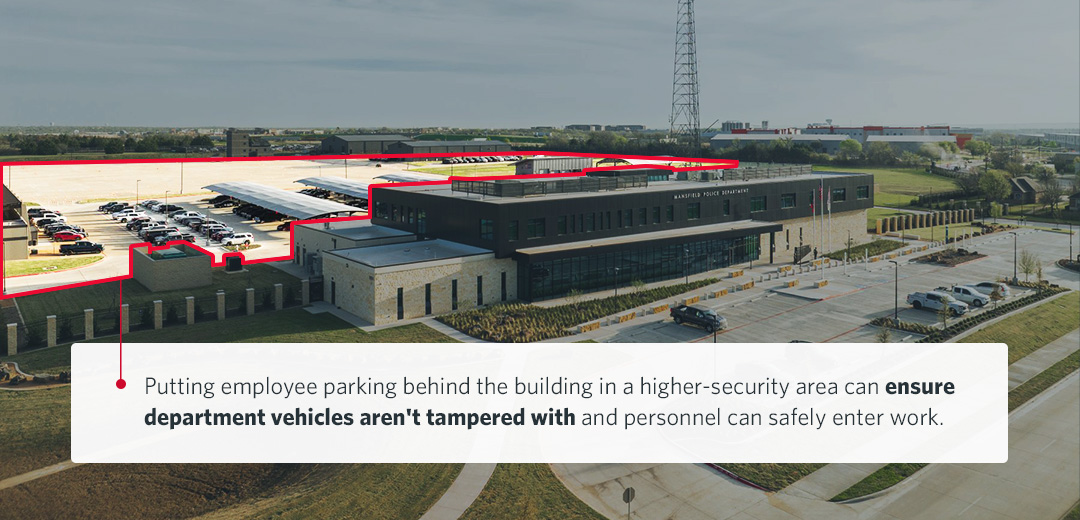
The position of the parking lot in relation to buildings is important for personnel safety. Departments should always keep public and personnel parking separate since there are different safety risks for each kind of parking. Putting employee parking behind the building in a higher-security area can ensure department vehicles aren’t tampered with and personnel can safely enter work.
When entering and exiting the building, lights should be bright enough to fully illuminate the parking lot. There should be no blind corners that aren’t being monitored with security cameras, and access points should all be brightly lit. Avoid lights that are too bright, as they can blind personnel and make it harder to see when walking from inside to the parking lot.
Natural Access Control
Access control means monitoring any entrance that leads into a police facility. In addition to putting locks on doors, departments need a secure way for vehicles to enter and leave the personnel parking lot. There should also be technology that registers license plates so there’s a record of everyone who has entered the area.
Parking lot access gates must open and close quickly so people in additional cars or on bicycles can’t tailgate into the parking lot. However, additional locks on facility doors are a good way to deter anyone who manages to get through the first gate. If departments have a motion alarm system set up, they can quickly respond to intruders.
Entry and exit points should have clear lines of sight so intruders can’t hide nearby and then slip inside. For the same reason, access points should also have bright lighting that’s shielded to reduce glare. Having video surveillance is another essential for access control since it warns away criminals and records any trespassers.
To plan effective natural access control at a police facility, consider pathways for individuals to enter and exit the parking lot and building. Make these pathways obvious and ensure there’s lighting and video surveillance present. Departments should design their facility so there aren’t creative ways to access the parking lot or buildings.
Territorial Reinforcement
This CPTED principle focuses on making a space appear owned. If there is an active guardian taking care of a property, criminals are much less likely to intrude and cause damage. Ways to make a police facility signal ownership include:
- Intentional landscaping.
- Personalized signage.
- Activity that’s visible from outside.
While surveillance cameras can help with security, they don’t have the same weight as seeing actual people moving around a facility. Posting personnel at the entrance gate or allowing a clear sight line from the building to the parking entrance can help signal guardianship.
Signage is another excellent way to communicate ownership. It shows pride in the local area and allows departments to set clear boundaries around their property. Plenty of signage shows that personnel know what belongs to them, and criminals can expect to run into staff if they cross the property line.
Maintenance
When spaces are obviously cared for, criminals will think twice before trying to access them and cause damage. Many crimes simply happen because there’s opportunity, but a well-cared-for facility signals that someone is paying attention to the area. Some examples of maintenance at a police facility include:
- Trimmed bushes.
- New mulch.
- Graffiti-free signs.
- Clean walls and roofs.
- Bright parking lines.
All of these signal funding and an interest in taking care of police property. Well-maintained areas also often have security cameras. Although maintenance won’t deter criminals who are fixated on harming specific personnel, it can discourage petty crime like vandalism. In addition to reducing crime, maintenance boosts morale for personnel and communicates cultural values like dedication and integrity.
How to Harden the Perimeter and Parking Area
Police departments that design their facilities with CPTED principles can make their parking lot less susceptible to crimes of opportunity. However, there are additional steps to consider that can harden the property perimeter and keep more determined criminals outside property lines:
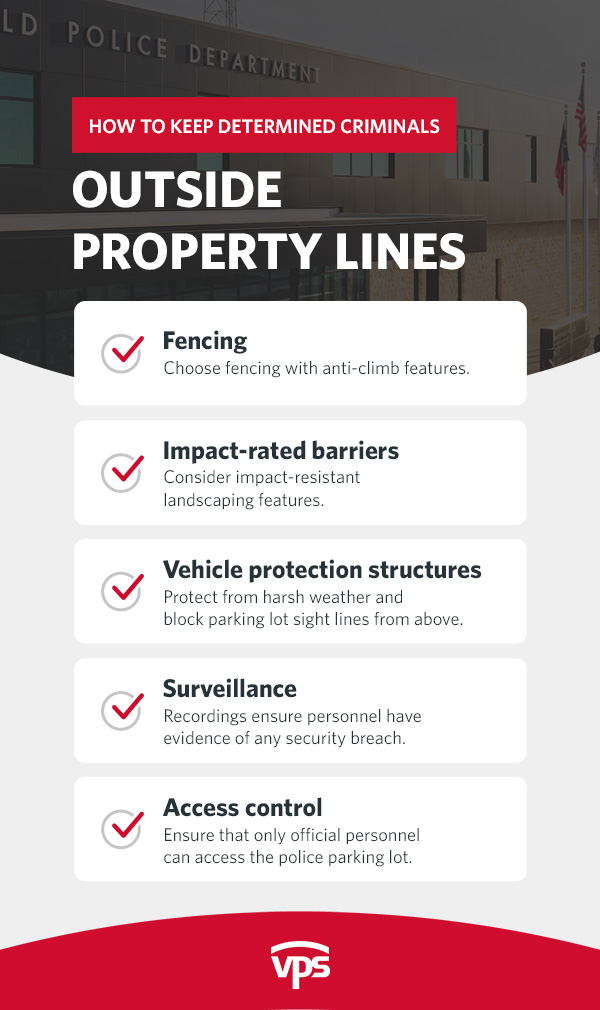
- Fencing: Choose fencing with anti-climb features. Individuals should not be able to scale the fence, and they shouldn’t be able to throw something over the top to help them climb.
- Impact-rated barriers: Departments should consider impact-resistant landscaping features so no one can drive through them and ram vehicles in the parking lot.
- Vehicle protection structures: Covered police parking is protected from harsh weather and can block parking lot sight lines from above.
- Surveillance: Both buildings and parking lots should be covered with quality detection and monitoring equipment. Recordings ensure personnel have evidence of any security breach.
- Access control: Badges and mobile credentials ensure that only official personnel can access the police parking lot.
Regardless of how well it’s been thought through, there are loopholes in public safety facility design. Departments can work to identify weak design points and then implement additional security measures to cover those weaknesses. Think about how criminals could break through security and incorporate strong measures to prevent that.
Design Best Practices and Common Pitfalls
Some best practices to consider for police facility planning include:
- Keep staff and visitor parking lots separate.
- Ensure personnel have emergency exits.
- Layer types of security for higher success.
- Have a plan to handle nature and weather conditions, like snow and heat.
- Regularly assess and update security measures.
It’s easier to implement these strategies during the design phase, when parking lots are first being built. However, departments can adjust their security measures to increase safety in older parking lots. Common pitfalls to avoid for police parking security include:
- Camera blind spots.
- Inadequate lighting.
- Lack of maintenance and updates.
Parking lots should be set up to create a safe zone for personnel, where sight lines from the building are open and sight lines from outside are closed. Apart from monitored access points, it should be impossible for people to access the parking lot. All equipment should be monitored and updated so it works continuously.
Benefits of Covered Parking for Police Vehicles
Trustworthy vehicles are expensive and must be maintained to ensure officers can effectively perform their work. Many police vehicles also have additional features like sensitive electronics that make them more costly. Protecting vehicles from harsh weather and vandalism is essential for officer safety and the department budget.
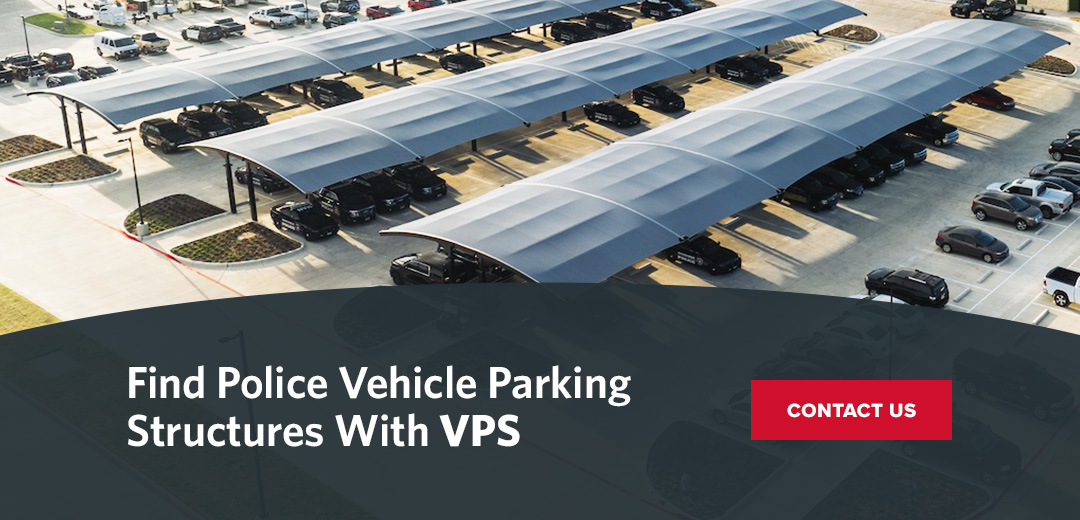
The primary benefit of police vehicle parking structures is that they protect costly equipment from harsh weather. Hail, snow, rain, heat, and UV rays can all take a toll on police vehicles. Electronics may suffer if they get overheated, so shading vehicles is a priority for many police departments. By keeping vehicles sheltered from the weather, departments can reduce equipment maintenance and replacement costs.
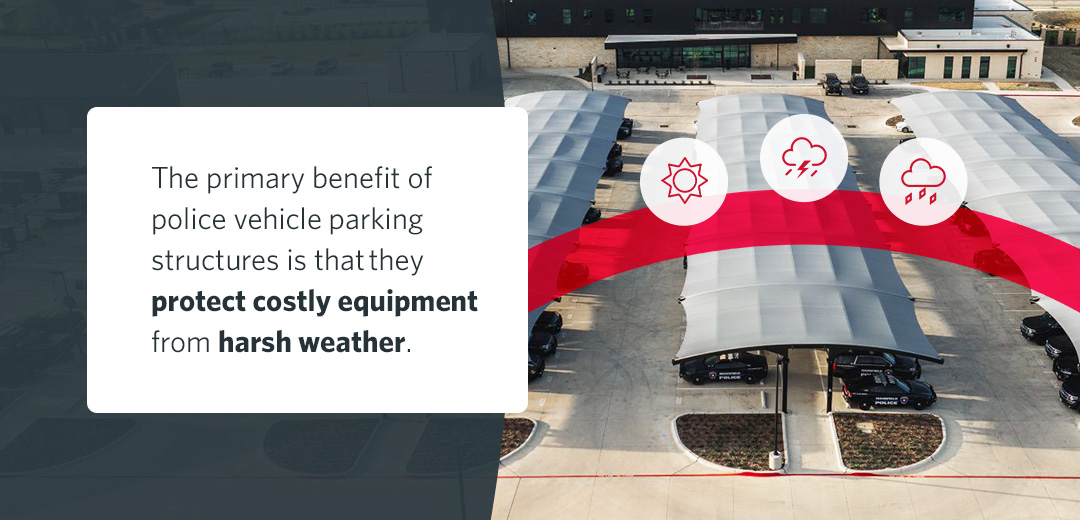
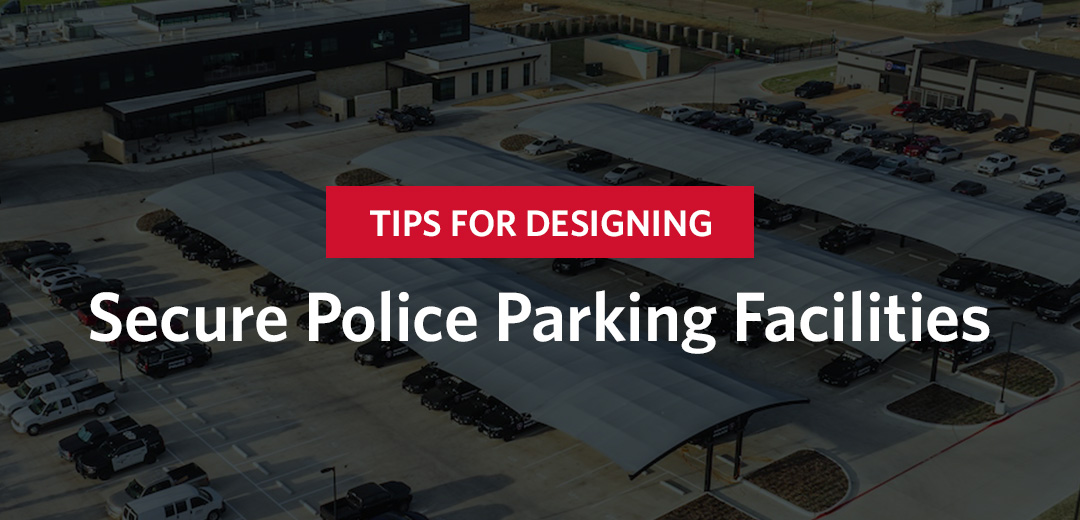
Parking canopies can be installed strategically to increase visibility from inside the police facility, while reducing it from without. Some canopies may also be made of steel or other protective materials. While canopies can reduce sight lines, they shouldn’t be counted on as protection from shooters. They are one part of a holistic security system.
In addition to offering some physical protection, parking canopies align with the territorial reinforcement principle found in CPTED. They aesthetically improve parking lots and show pride of ownership in police facilities. When well-cared for, they also demonstrate the maintenance principle of CPTED.
Frequently Asked Questions
Have questions about installing vehicle protection structures for police departments? Here are several FAQs to help departments navigate their next steps.
How Do I Avoid Creating Blind Spots Under the Canopy?
When departments install vehicle protection structures, they should adjust surveillance equipment so the entire property is still being monitored. Canopies can help protect personnel who are walking back and forth from their vehicles.
However, it’s important that any trespassers are identified immediately, whether they’re underneath vehicle canopies or anywhere else on the facility property. Reviewing camera footage after canopies are installed can help department personnel ensure the parking lot is still fully monitored.
How Do I Install Canopies Without Disrupting Daily Operations?
The right company can structure the installation process so it happens quickly and with minimal disruptions to required work. If departments have specific concerns about installation, they can talk to their vehicle protection structure company about potential solutions.
Options include installing canopies overnight, planning them for a slow season, or installing canopies in stages so employees still have secure parking spaces available. Security is just as important during installation as any other time for a police parking facility.
Find Police Vehicle Parking Structures With VPS
VPS has served clients with the highest-quality vehicle protection structures for over three decades. We offer both metal and fabric canopies in a range of designs to meet unique project needs. Our structures are built to last, and we have the capabilities to complete extensive parking lot projects.
Some of our clients include airports, auto dealerships, and corporations with parking lots. Whether companies are building a new parking lot or improving an existing property, we can help with custom, durable solutions. It’s our goal to optimize available space for the most coverage with the least inconvenience.
We partner with companies throughout their entire project, from design to construction and follow-up maintenance. Police departments looking for a turnkey solution for vehicle protection structures can depend on us. Contact us today for a quote and to learn how we can support department parking lot goals.