6. Service Animal Relief Areas
Service animals are indispensable companions for individuals with disabilities, providing crucial support and enhancing their quality of life. These specially trained animals are vital in offering assistance, guidance, and emotional support to their handlers, allowing them to navigate daily life with increased independence and confidence.
In the context of airport accessibility, recognizing the significance of service animals is paramount. These animals are highly trained partners that assist individuals with various disabilities, including visual impairments, mobility limitations, and certain medical conditions. Service animals are trained to guide their handlers, alert them in case of medical emergencies, and mitigate anxiety or panic attacks.
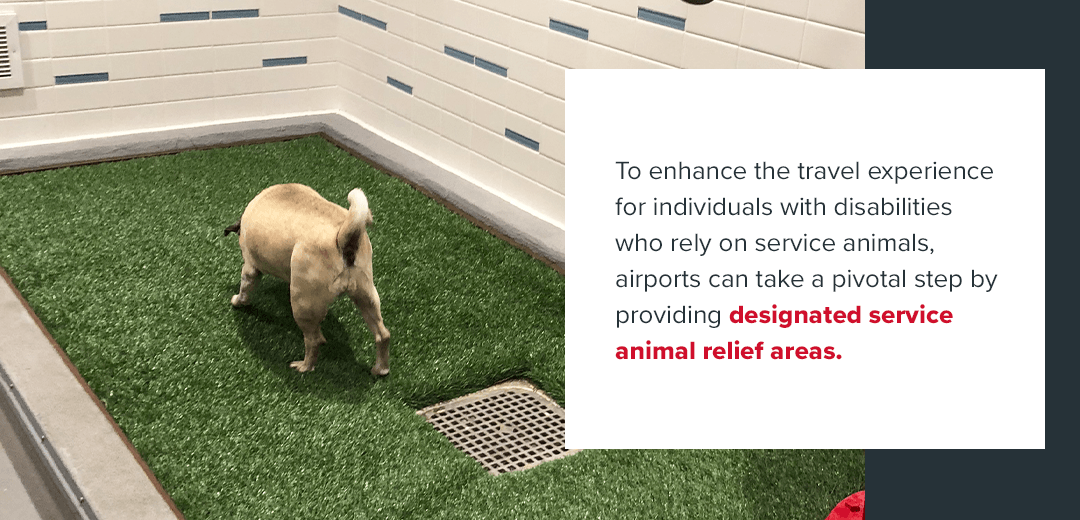
To enhance the travel experience for individuals with disabilities who rely on service animals, airports can take a pivotal step by providing designated service animal relief areas. These areas should be thoughtfully designed spaces where service animals can relieve themselves comfortably and hygienically. By offering conveniently located, clean, and quiet spots, airports acknowledge the essential needs of service animals and their handlers during their journey.
Service animal relief areas contribute to the overall accessibility of airports. These spaces recognize the unique requirements of individuals with disabilities and demonstrate a commitment to fostering a supportive environment. While it might be easy to overlook this aspect of accessibility, the provision of service animal relief areas represents a critical consideration that enhances the travel experience for an often-underrepresented group of passengers.
7. Baggage Assistance
Navigating airports can be demanding for a diverse range of travelers, particularly those with disabilities. Heavy baggage, a common challenge many face, can be a considerable obstacle affecting the travel experience. For passengers with disabilities, this aspect adds complexity and can become overwhelming.
To address these challenges, airports can implement accessible baggage assistance solutions. Prioritizing baggage services for passengers with disabilities is a critical step in this direction. By offering priority baggage handling, airports extend a gesture of support that acknowledges the specific needs of these travelers. This approach may help streamline the journey and minimize potential stressors.
Baggage transportation assistance is another avenue for enhancing accessibility. Airports can offer dedicated staff or services to assist passengers who require help transporting their baggage. This assistance can be especially valuable for those with mobility limitations. By providing trained personnel to aid with baggage transportation, airports ensure all passengers can move through the airport with ease and confidence.
8. Sensory Areas
Sensory areas are purposefully designed spaces within airports that cater to individuals with sensory sensitivities. These areas provide a sanctuary from the bustling environment of the airport, offering a quiet and calming space for emotional and physical regulation. Recognizing the importance of these spaces, airports are increasingly implementing sensory areas to improve accessibility and create an inclusive environment.
Airports can be overwhelming environments, with bright lights, loud announcements, and constant sensory stimuli. For travelers with sensory sensitivities, this sensory overload may trigger anxiety and stress. Quiet sensory rooms are invaluable for providing a respite.
These spaces are deliberately designed to be serene and calming, with soft lighting, comfortable seating, and sensory-friendly activities. They offer a haven where individuals can retreat to regain emotional equilibrium and manage sensory overload. Beyond their immediate benefits, sensory areas also contribute to the overall accessibility of airports. By offering these spaces, airports demonstrate their commitment to inclusivity.
9. Priority Parking
Priority parking centers on providing designated parking spaces that are conveniently located and easily accessible to passengers who require extra assistance. By offering priority parking options, airports demonstrate their commitment to inclusivity and set a higher standard for accommodating diverse passenger needs.
These parking spaces, often situated close to terminal entrances, alleviate the challenges that passengers with disabilities or limited mobility might face when navigating expansive parking lots. This proximity reduces the distance passengers need to travel, making the journey from car to terminal smoother and less strenuous.
To ensure the seamless transition from priority parking to the terminal, airports can implement various accessibility-enhancing measures:
- Shuttles: Shuttles that are equipped to accommodate passengers with mobility aids can provide a comfortable and efficient mode of transportation between the parking area and the terminal.
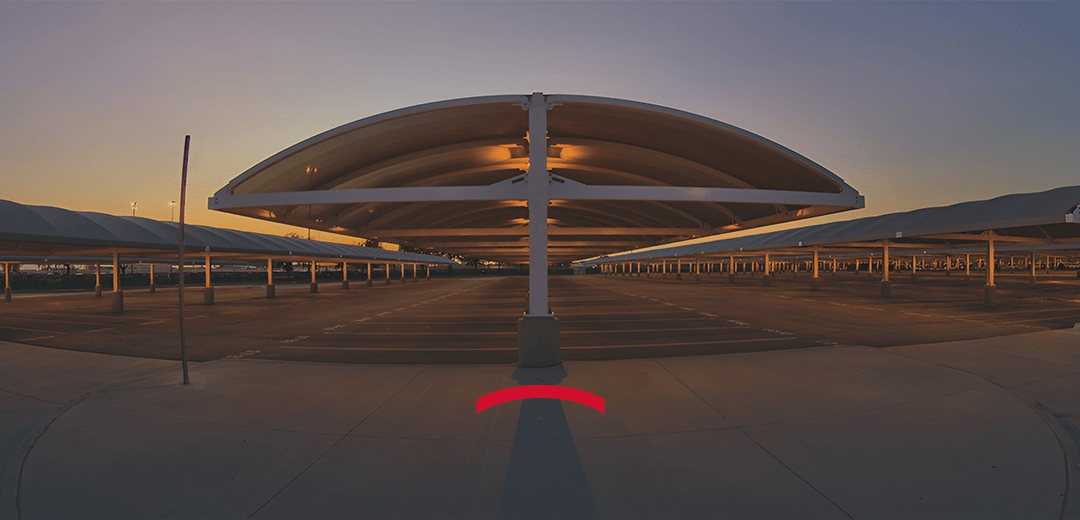
- Covered parking structures: These structures shield vehicles from the elements while minimizing the weather exposure passengers face while entering or exiting their cars. This aspect is particularly significant for individuals with limited mobility, ensuring they’re protected from adverse weather conditions and enhancing their overall comfort.
- Covered walkways: The integration of covered walkways between priority parking areas and the terminal further promotes accessibility. These covered walkways may reduce accident risks by providing a protected path for passengers. By mitigating exposure to potential hazards and ensuring a safe and obstacle-free route, waterproof covered walkways may contribute to a more secure and stress-free travel experience.
Contact VPS for Covered Parking and Covered Walkway Structures
In the journey toward improving accessible flight travel, we’ve explored various innovative strategies that embody the spirit of inclusivity. From sensory areas providing a haven for emotional respite to priority parking that streamlines the travel journey, every facet contributes to a more accommodating and seamless experience for all passengers.
VPS can help airports create parking and walkway spaces that promote greater inclusivity. Much like the careful design and engineering that go into our projects, we are committed to enhancing accessibility for all. With a legacy of excellence, our comprehensive approach to project management, design, and post-project support aligns seamlessly with the ideals of an accessible airport.
Contact VPS for covered parking and walkway structures and pave the way for a future where every traveler — regardless of ability — experiences the freedom of air travel without barriers.