

Recognizing that parking lots are an untapped opportunity in commercial real estate, forward-thinking businesses are turning these spaces into revenue-generating assets. Sustainable parking design can extend beyond ground-level improvements to capitalize on the valuable air rights above.
The Hidden Cost of Traditional Parking Lots
After construction, traditional lots quickly turn into ongoing financial drains. Understanding why conventional parking design represents such a significant inefficiency in commercial property management requires recognizing the hidden costs.
The Financial Impact of Dead Space
Parking facilities are single-purpose assets that store vehicles while generating ongoing costs. These vast areas are purposely larger to handle demand on peak days but sit empty on quieter ones, tying up capital in nonproductive space.
Additionally, conventional lots require regular maintenance, resurfacing, and eventual replacement, yet provide no return on investment. Property owners maintain expensive infrastructure that serves one passive function while missing opportunities to generate income from the same footprint. And without intervention, these surfaces actively depreciate vehicles through sun exposure, compounding the hidden cost of ownership.
Runoff, Heat, and Depreciation
In large U.S. cities, 26% of land is parking lots. Asphalt surfaces create urban heat islands that raise cooling costs for nearby buildings and accelerate vehicle deterioration. Dark pavement absorbs and retains solar energy throughout the day, creating surface temperatures that can damage tires, fade paint, and stress automotive components.
This heat absorption forces adjacent buildings to work harder to maintain comfortable indoor temperatures, driving up energy expenses.
Stormwater runoff creates additional environmental and financial burdens. Untreated water from traditional lots flows into local waterways and can overwhelm municipal drainage systems during heavy rainfall events. Many jurisdictions now require costly stormwater management systems to address these issues, adding another layer of expense to conventional parking infrastructure.
Phase 1: The Foundation of Sustainable Design
Building a sustainable parking facility requires a systematic approach that begins with intelligent ground-level design. These foundational improvements address immediate environmental concerns while establishing the infrastructure necessary to support more advanced revenue-generating systems.
Smart Materials and Permeable Paving
Modern eco-friendly parking lot design starts with material selection that successfully addresses environmental concerns and long-term operational costs. Permeable paving systems allow water infiltration directly through the surface, reducing runoff while naturally filtering pollutants before they reach groundwater supplies.
These solutions come in various forms, from porous concrete to interlocking grid systems that support vegetation within the parking surface. Cool pavement made with specialized light-colored surface coatings represents another innovative approach to reflecting sunlight and absorbing less heat. An Arizona study found that while traditional asphalt reached midday surface temperatures up to 152 degrees Fahrenheit, cool pavements stayed 10 to 16 degrees cooler.
While initial installation costs for these advanced materials may exceed traditional asphalt, the long-term savings from reduced stormwater management requirements and extended surface life often justify the investment.
Stormwater Management Strategies
Comprehensive stormwater management includes strategic drainage design and retention systems. Environmentally friendly parking lots incorporate bioswales, retention ponds, and underground storage systems that capture and slowly release rainfall to prevent flooding.
These systems reduce environmental impact and decrease or eliminate stormwater fees in many jurisdictions. Integrating natural drainage features can enhance the aesthetic appeal of parking areas while providing measurable cost savings over time.
Energy-Efficient Lighting and Controls
LED systems with intelligent controls are one of the most immediate opportunities for cost reduction in parking facilities. Advanced sensor technology automatically adjusts lighting levels based on occupancy and ambient conditions, reducing energy consumption without compromising safety or security.
Smart lighting systems can achieve energy savings of 17% to 94% compared to traditional manual control systems. Occupancy-sensing controls typically deliver up to 60% savings. Daylight-integrated solutions achieve over 40% energy reduction in large facilities.
These improvements translate to significant reductions in operational expenses. They also provide enhanced security features and can be integrated with other building management systems.
Phase 2: Vertical Sustainability
While ground-level improvements provide valuable environmental benefits, property owners can look beyond traditional horizontal thinking to capitalize on the valuable space above their parking surfaces.
This vertical approach to sustainability unlocks revenue-generating potential that fundamentally changes the economics of parking infrastructure from expense to asset.
Maximizing Air Rights With Solar Shade Structures
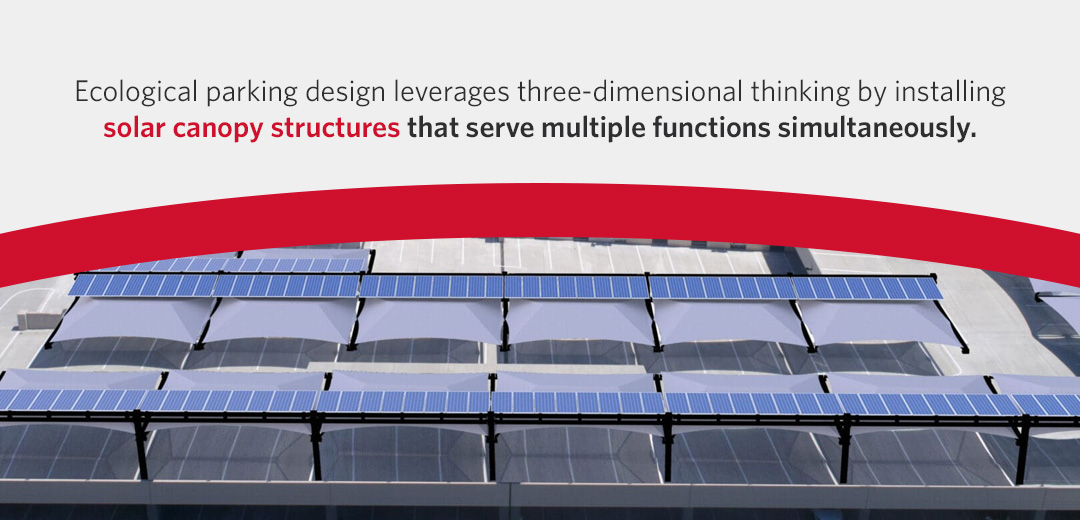
Ecological parking design leverages three-dimensional thinking by installing solar canopy structures that serve multiple functions simultaneously.
Solar-covered parking systems convert harmful solar radiation into clean energy while providing valuable shade for parked vehicles. These structures can generate significant electricity for on-site use or sale back to the grid, creating a consistent revenue stream from previously unproductive space.
The elevated design maintains full parking functionality while adding substantial value to the property.
Mass Coverage for Protection and Temperature Control
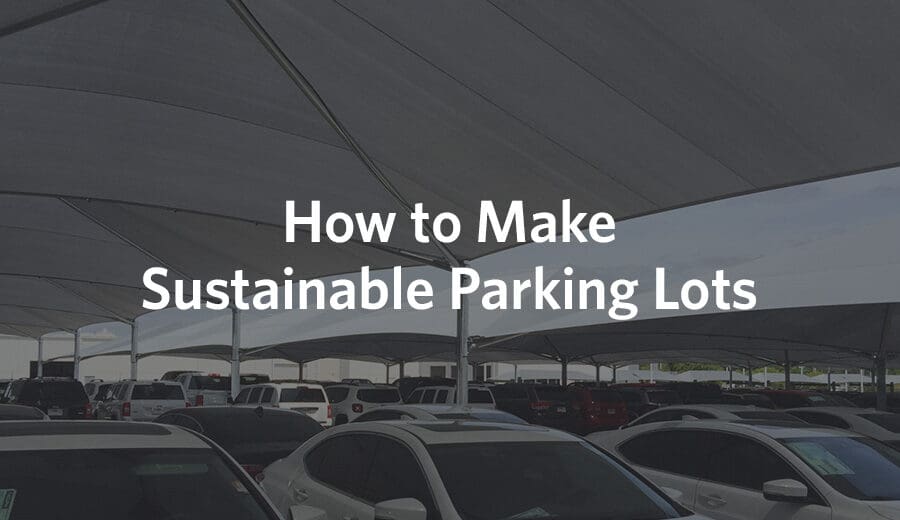
Mass coverage systems shield vehicles from hail damage, UV deterioration, and extreme temperature fluctuations that accelerate wear and reduce resale values.
Support structures with a knitted mesh design provide 90% shade and allow heat to escape, reducing the interior temperature of a car parked beneath by 40 degrees Fahrenheit. This temperature reduction decreases fuel evaporation, reduces air conditioning loads, and creates a more pleasant experience for users.
The protection also extends the life of the parking surface by reducing thermal stress and UV damage to the asphalt.
Supporting the EV Revolution
Electric vehicle charging infrastructure requires weather protection to ensure reliable operation and user comfort. Green parking lots with covered charging stations create ideal conditions for EV adoption while positioning properties to meet the growing demand for EV support.
Solar canopies paired with EV charging stations generate clean energy, which supports clean transportation. This combination appeals to environmentally conscious tenants and customers while potentially commanding premium rates for covered, climate-controlled charging spaces.
The ROI of an Ecological Parking Strategy
The business case for sustainable parking infrastructure combines environmental compliance with measurable financial returns. When property owners evaluate the complete financial picture, the investment often demonstrates compelling returns that justify the initial capital expenditure.
Energy Generation and Reduced Operational Costs
Solar parking structures can generate enough clean energy to offset facility electrical costs while potentially creating surplus power for sale to utility companies. These benefits can provide attractive returns on investment within reasonable payback periods. The shade provided by these structures also reduces cooling loads on adjacent buildings, creating additional operational savings.
Lower Insurance and Maintenance Expenses
Expertly covered parking areas experience less weather-related damage and require less frequent maintenance than exposed surfaces. Hail protection structures can prevent catastrophic damage to vehicles and infrastructure, potentially qualifying properties for reduced insurance premiums.
Protection against UV radiation and thermal cycling extends the life of asphalt surfaces, reducing resurfacing frequency and associated costs. Vehicle protection also reduces insurance claims and improves tenant satisfaction, supporting higher retention rates and potentially premium pricing.
Brand Value and Customer Experience
The visual impact of solar canopies and green parking lots communicates corporate environmental commitment while providing tangible benefits.
Covered parking spaces typically lease at premium rates compared to exposed alternatives, and the improved experience encourages customer loyalty and positive brand association. These “soft” benefits often prove as valuable as the direct financial returns from energy generation and cost savings.
Unlock the Full Potential of Your Parking Facilities with VPS
Climate change projections indicate an increase in the frequency of severe weather events, making asset protection critical for long-term property values. Hail prevention structures and advanced shade systems provide defense against weather damage while supporting operational resilience.
The growing adoption of electric vehicles will demand significant investments in charging infrastructure across all property types. Parking facilities with covered charging areas and adequate electrical capacity will be well-positioned to capture this expanding market segment without extensive retrofitting costs.
Regulatory trends continue moving toward stricter environmental standards and sustainability reporting requirements. Properties with measurable ecological benefits will meet compliance requirements and may qualify for incentives and favorable financing terms.
The shift from traditional parking lots to sustainable, revenue-generating assets requires thinking beyond ground-level improvements to the full potential of three-dimensional space use. Understanding how to make sustainable parking lots that generate revenue rather than consume resources represents a fundamental shift in property management strategy. Contact VPS today to explore how vertical sustainability solutions can unlock the revenue potential of parking facilities.