As electric vehicles (EVs) continue to be embraced and adopted worldwide, the demand for building EV charging stations to accommodate consumer habits will inevitably increase. For every long-distance trip that electric car drivers take, there’s a need to find a conveniently located EV charging station.
With the global market volume of electric vehicles projected to reach $1.1 trillion by 2030, there’s an opportunity for forward-thinking commercial organizations to prepare for this rising demand. However, knowing how to build sustainable EV charging stations requires a clear understanding of how to maximize their benefits, from both a consumer and a business perspective.
Here’s what companies should consider to meet consumer demand and build an EV charging station that meets organizational needs.
Choosing Where to Build an EV Charging Station
The placement of a sustainable EV charging station will play a pivotal role in determining its potential success. For new businesses, it’s an opportunity to showcase a dedication to convenience and sustainability to potential customers. For existing organizations, it presents a new avenue of income and a potential expansion of how others perceive the business.
Consider the following variables when choosing a place to build a sustainable EV charging station:
- The chosen site’s ability to support electric vehicle charging — an assessment by a qualified electrician should determine whether the site is appropriate
- The area’s vehicle flow potential in relation to nearby shopping outlets, eateries, offices, and highways
- The walkability factor of consumers charging EVs close to coffee shops and other conveniences
- The space for potential future growth and expansion to meet consumer needs
- The capacity to adapt to any potential future changes in technology
Link With Local Utilities Providers
It’s important to consider the predicted power consumption of an EV charging station. Some areas may not be fully equipped to support a large number of new chargers. Liaising with local utility companies that provide gas, water, cable, and electricity to the surrounding areas can help identify potential challenges before construction begins.
This approach ensures that future risks are identified early and may result in long-term cost savings. For example, an organization seeking to establish a station with high-energy-consuming DC chargers may need to consult a local utility company to determine a safe and efficient method for installation in a rural area.
Build Smart but Build Safely
Building EV charging stations can be a delicate balancing act, especially for organizations with a primary service offering that extends beyond fueling vehicles. Avoiding disruptions to your operations is important, but so is staying vigilant to safety requirements.
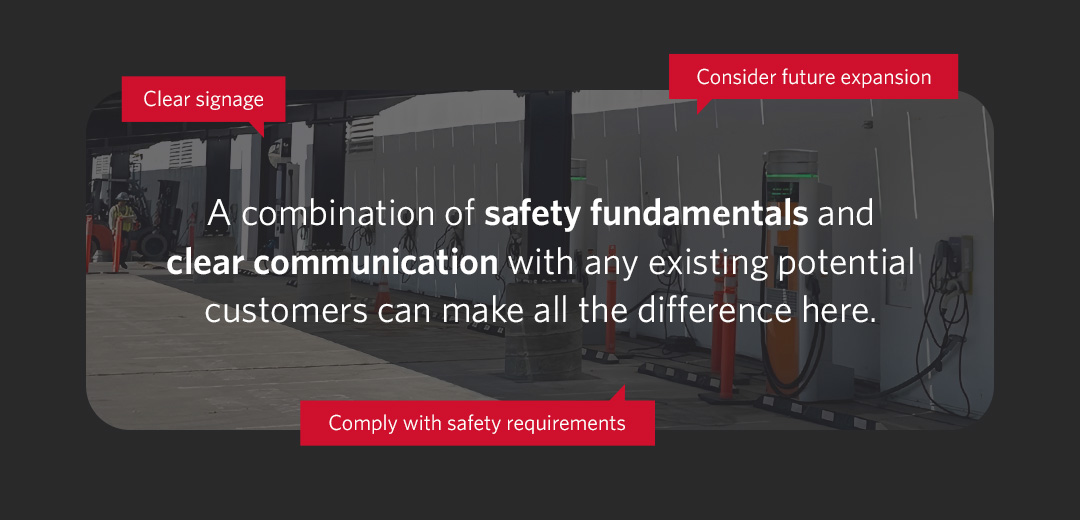
A combination of safety fundamentals and clear communication with any existing potential customers can make all the difference here.
- Clear signage: Whether it’s to let future customers know what’s coming or to give existing customers a consistent service, clear signs that explain what’s happening are essential. Establish an alternative path around any construction work to keep things running smoothly.
- Consider future expansion: Organizations building sustainable EV charging stations may also be considering expansion as part of a long-term business strategy. Taking the future into account during the groundwork can help with preparedness and reduce the amount of work needed when those extra stations are added.
- Comply with safety requirements: Any sustainable EV charging station should meet the National Electric Vehicle Infrastructure Standards and Requirements. Doing this showcases the organization’s adherence to strict standards and creates a brand association with quality and safety.
Search for Renewable Energy Integration Opportunities
For EV charging stations, sustainability can be an integral part of a build plan. Having access to natural sources like wind or solar power, combined with battery systems, can reduce reliance on fossil fuels and help an organization comply with federal renewable energy requirements.
However, renewable integration doesn’t end with natural resources. Building a sustainable EV charging station also involves integrating the use of sustainable materials. Using recycled plastic or sustainably sourced metal and timber during manufacturing creates a durable amenity that contributes to self-sufficiency and reduces reliance on the grid.
Sustainable Shade Structures
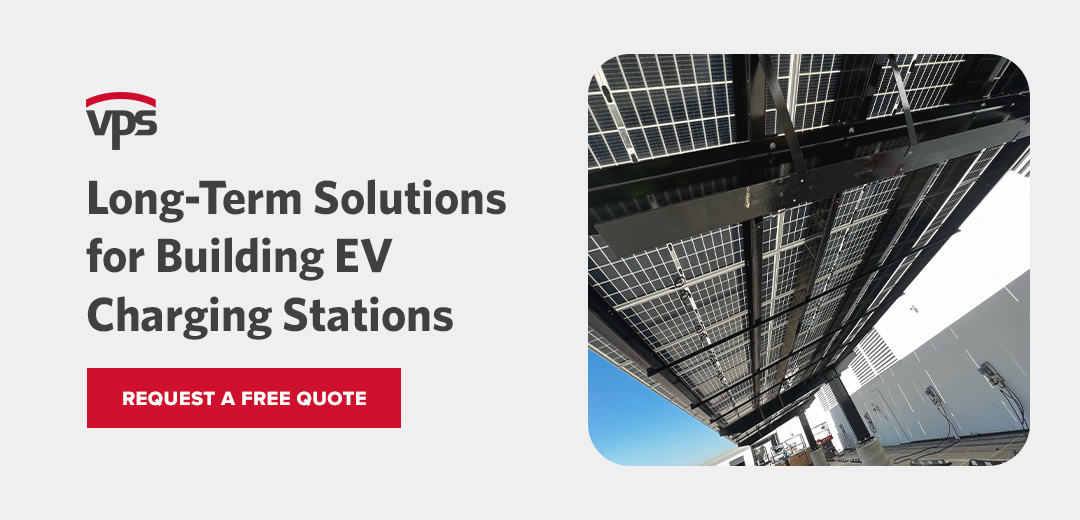
Integrating electric vehicle stations and sustainable parking canopies is an ideal combination. Shading large areas can prevent the concrete from directly absorbing sunlight, while also reducing thermal stress on the EV charging hardware. It also offers EV protection from rain, weather damage, and even hail, which can make a big difference to organizations located where hail is common.
A sustainable EV charging station that uses shade structures will also benefit from:
- Business and site improvements: The comfort of a safe, sheltered area above an EV can encourage customers to stay longer, contributing to increased foot traffic and sales for local businesses. Solar canopies can also make a charging station more identifiable from a distance and more visually appealing when up close. Having solar shade structures will also help to reduce electricity use and the associated costs.
- A better driver and customer experience: Drivers will be able to exit their car while charging and enjoy the comforts of a sustainable shelter. Being protected from direct sunlight will also keep an EV cooler and reduce reliance on air conditioning.
EV technologies may still be an emerging industry, but exploring sustainable covering options will always be a long-term benefit for businesses. By combining solar covered parking solutions with EV charging stations, sustainability will be a natural outcome. Consumers may see this arrangement as a signpost when seeking a convenient and eco-friendly organization to entrust with their business.
Long-Term Solutions for Building EV Charging Stations
Understanding how to build an EV charging station involves finding the right place, time, and materials. Incorporating sustainability within that plan sets organizations up for an anticipated future where renewable resources are the standard choice for every business.
It’s not always easy to remain one step ahead in changing landscapes, which can make planning to build anything a challenge these days. However, being at the forefront of a future where increased EV charging station needs are commonplace puts organizations in an ideal position.
While competitors look to make unexpected shifts to modern consumer demand, those who’ve embraced long-term sustainable solutions will be leading the way by delivering efficient service and reaping the financial benefits that come with it.
With our solar-covered parking solutions, VPS harnesses solar power for your commercial energy costs through protection structures that shield and protect vehicles, fleets, and parking lots of all sizes. Organizations looking to take advantage of renewable energy initiatives while reducing their utility fees should reach out to us and get a free quote today.