Solar-integrated parking structures give commercial facilities a strategic, dual‑purpose upgrade — they generate clean, on-site power while protecting vehicles and equipment from weather exposure. And with rising energy costs and federal incentives available to offset project expenses, the financial case for solar parking has never been stronger.
For facility managers balancing multiple capital priorities, these systems deliver measurable ROI that supports long-term budgeting and sustainability goals. But capturing that value requires a structured approach. This guide outlines the process facility managers should follow to transform underused parking areas into sustainable, revenue-generating assets.
What Are Solar Parking Structures?
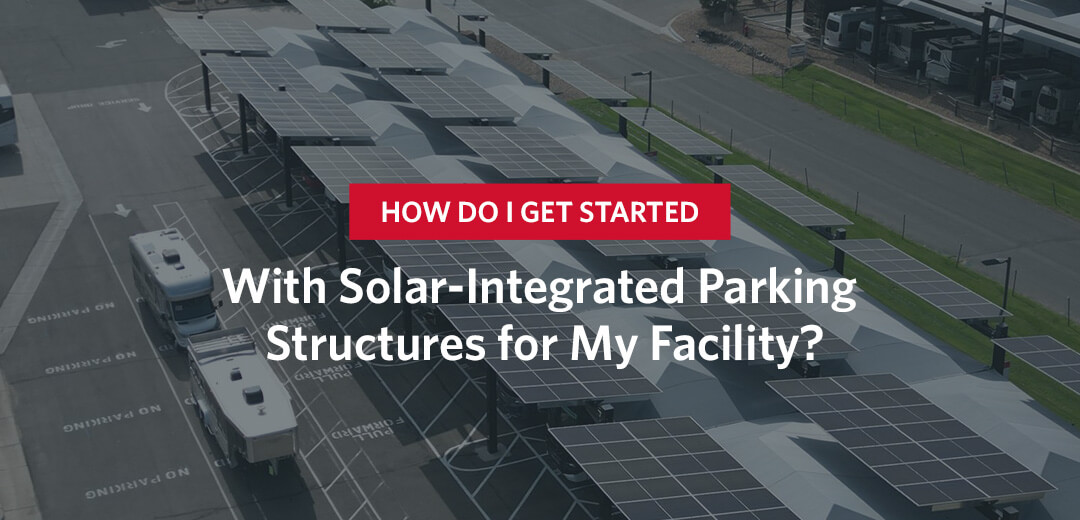
Solar-integrated parking structures are elevated canopy systems equipped with photovoltaic panels that turn parking lots into renewable energy producers. They protect vehicles from weather damage while generating electricity that offsets facility energy consumption.
These systems often integrate with electric vehicle charging stations, creating a sustainable green energy ecosystem. The combination of weather protection and on-site energy generation makes solar parking structures a strategic infrastructure upgrade for properties seeking to reduce operating costs while advancing sustainability objectives.
Benefits for Commercial and Institutional Facilities
Solar-integrated carports reduce energy costs by producing clean electricity, delivering tangible operational and financial advantages. Many facilities earn additional revenue by charging premium prices for shaded or EV-equipped parking spaces, transforming parking areas from cost centers into assets.
Federal and state incentives further improve project economics. Financial benefits extend to include asset protection — reducing vehicle maintenance costs and minimizing weather-related damage. Solar-covered parking structures enhance the customer experience by providing comfortable, protected parking that differentiates facilities from competitors.
Visible sustainability leadership strengthens brand positioning. Organizations that implement solar parking demonstrate environmental commitment, appealing to eco-conscious customers and employees while potentially qualifying for green building certifications.
A Multipurpose Infrastructure Asset
Beyond simple shade installations, solar parking structures are strategic infrastructure upgrades. Vehicle protection capabilities reduce downtime and extend asset life by shielding fleets from hail, UV damage, and extreme temperatures. This protection preserves vehicle condition and market value for automotive dealerships and distribution centers.
Well-engineered structures improve site lighting, security, and accessibility while meeting building codes. Corporate and office facilities benefit from improved employee satisfaction, as covered parking is a valued workplace amenity.
The sustainability demonstration carries significant brand value. Solar canopies serve as prominent, customer-facing evidence of environmental commitment. This visibility supports corporate social responsibility initiatives and resonates with stakeholders who prioritize sustainability.
1. Initial Assessment and Feasibility Study
The discovery phase is critical for determining project viability. A thorough feasibility study provides the data needed to make sound investments, letting decision-makers determine whether the project aligns with facility goals before committing resources. Indicators that a facility is well-suited for solar parking include ample unshaded lot space, high daytime electricity consumption, and alignment with sustainability objectives.
Conducting a Thorough Site Evaluation
A professional site evaluation assesses physical and environmental conditions. Teams review the parking lot’s layout and topography to determine optimal parking structure placement. They also assess soil stability, drainage patterns, and foundation requirements, since these factors influence construction costs and timelines. Finally, they determine system size and expected energy output by measuring year-round solar exposure, accounting for shading from nearby buildings or vegetation.
Analyzing Energy Needs and Setting Goals
Reviewing utility bills and identifying load profiles provides the foundation for energy analysis. Teams calculate parasitic loads to determine how much on-site solar generation the facility can absorb versus exporting to the grid.
Future energy needs require careful projection. Planning must account for electric vehicle charging stations and anticipated usage patterns. Energy management systems may maximize solar absorption by shifting discretionary loads to peak generation hours.
Budgeting, Incentives, and ROI
Cost estimates for equipment, installation, permitting, and long‑term maintenance form the foundation of any financial model. Federal incentives can offset a substantial share of those expenses, improving project viability. The two most impactful mechanisms are the Investment Tax Credit and accelerated depreciation through MACRS, which allows businesses to recover investments more quickly.
Return on investment modeling accounts for energy savings, incentive value, potential revenue, and maintenance costs over the system’s 25- to 30-year lifespan. Properties with high electricity costs and consistent solar exposure typically achieve payback periods of seven to 12 years.
2. Design and Engineering
Data gathered during the feasibility study directly informs the custom design and engineering phase. With proper planning, facilities can proceed with defining the project scope and financial expectations.
Choosing the Right Structure Type and Materials
Determining the optimal structure type depends on site constraints and objectives. Cantilevered and single-post designs maximize parking space efficiency, while double-post configurations provide stability for locations with demanding loads. Long-span structures cover large lots with fewer support points. V-type designs efficiently direct rainwater runoff.
Balancing durability, cost, and environmental factors drives material choices. Galvanized steel offers superior strength and cost-effectiveness, but aluminum presents advantages in coastal regions due to exceptional corrosion resistance.
Solar Panel and Inverter Selection
Equipment choices significantly impact long-term performance. High-efficiency monocrystalline panels maximize energy production in space-constrained installations. Bifacial panels capture ground-reflected light beneath solar canopies for parking lots, increasing total energy yield by 5% to 30%.
Inverter specifications must match system voltage, expected production, and grid requirements. Project partners evaluate equipment based on efficiency ratings, manufacturer warranties, and local climate performance.
Planning for EV Charging Integration
Electric vehicle infrastructure planning during initial design proves far more cost-effective than retrofitting later. The number of workplace and public EV chargers is rapidly increasing. Forward-thinking facilities install conduit and wiring infrastructure for future charging stations, substantially reducing expansion costs.
Integration planning addresses electrical capacity, charger placement to optimize traffic flow, and alignment of solar generation with charging demand patterns.
3. Permitting, Procurement, and Installation
The execution phase transforms engineering plans into physical infrastructure. Expert partners eliminate uncertainty in permitting and installation by managing complex regulatory requirements and specialized construction activities.
Understanding Local Building Codes and Permitting
Solar parking shade structures require multiple permit types. Structural building permits address foundations, canopy framework, and load-bearing specifications. Electrical permits cover wiring systems, inverters, grid interconnection, and safety disconnect mechanisms.
Application packages typically include site plans, structural engineering drawings stamped by licensed professionals, electrical schematics, and manufacturer specifications. Review timelines vary by municipality.
Selecting an Expert Partner for Procurement
The VPS design-build process demonstrates the comprehensive project management necessary for expansive, complex solar parking installations. Experienced partners manage procurement, logistics coordination, and construction execution, ensuring projects meet specifications, timelines, and budgets.
Warranties and manufacturer reliability provide lasting peace of mind. VPS solar panels carry warranties ranging from 10 to 30 years, depending on equipment selection.
4. Long-Term Operation and Maintenance
As long-term assets, solar carports require ongoing monitoring and maintenance to ensure optimal performance. Proactive management protects the initial investment and maximizes energy production.
Monitoring System Performance and Efficiency
Performance monitoring systems track real-time energy production, enabling facility managers to verify the system meets projected ROI targets. Monitoring includes inspecting mounting hardware, analyzing shading patterns, and tracking environmental factors.
Continuous monitoring enables predictive maintenance strategies. Regular analysis identifies developing issues before they cause significant production losses.
Establishing a Routine Maintenance Plan
Systematic maintenance preserves performance:
- Daily or weekly monitoring alerts teams to significant energy drops.
- Monthly inspections clear debris and check for damage.
- Annual professional testing and assessments verify components meet safety and performance standards.
Detailed maintenance logging creates valuable operational records. Documentation supports warranty claims, troubleshooting, and long-term asset management decisions.
Start a Solar Project With VPS
Implementing a solar-integrated parking structure is complex and demands specialized expertise at every stage. VPS has the proven experience to guide facilities through each phase detailed in this guide, from initial site assessment and custom engineering to permitting navigation and long-term system support.
As the industry leader in vehicle protection structures, VPS delivers turnkey solutions backed by decades of large-scale project experience. These solar parking systems combine structural durability with energy generation performance, creating infrastructure assets designed for long-term value. Explore how solar parking structures can reduce your operational costs and demonstrate sustainability leadership by requesting a customized project quote.