Driving is a key part of getting around in the U.S. In 2022, 94.5% of all residents 16 and older drove. That’s a lot of cars, and they all need parking spaces. With so many people driving and an increasing cost of living, people want to get more out of parking lots. It’s not enough to have spaces — property owners need to consider sustainability and protection. Designing more innovative vehicle protection structures is key to improving parking structures for owners and users.
Why Parking Lots Need to Change
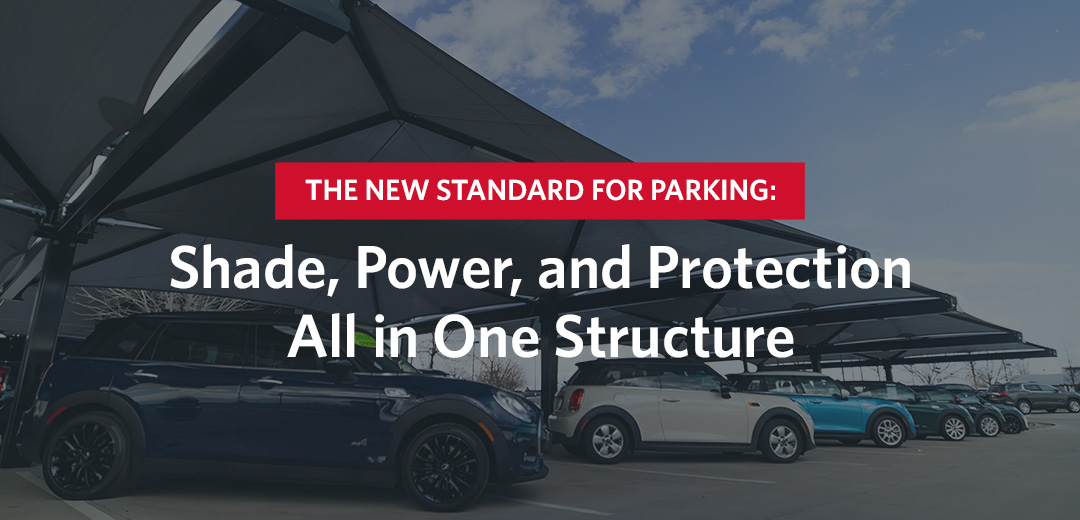
Traditional surface lots expose cars and people to weather and sun. Developments in technology like electric vehicles (EVs) demand more advanced parking. Innovative covered parking structures give a site the parking users demand while strengthening its property value.
Changing Weather Risks
Severe storms and hail have led to a rise in injury losses and expensive claims. In 2024, State Farm paid more than $1 billion in hail-related auto claims. A single event can roll into town and decimate vehicle fleets and dealer lots. Billion-dollar climate disasters have also become more frequent, increasing operational expenses. The more companies invest in protection, the easier it is to weather these storms.
Expansion of Electric Vehicles
Electric vehicles are still seeing increasing sales. Global EV sales hit 17 million units in 2024. With more fleets and consumers switching to electric, parking structures must accommodate them with protected charging infrastructure. Integrating solar canopies and EV charging improves the user experience and keeps people returning to parking structures.
Alternative Energy Needs
Solar capacity expanded in 2024. Solar photovoltaic (PV) systems accounted for most of the new installations. Corporate solar can help companies generate power and promote sustainability. Solar-covered parking converts underused surface area into productive real estate. Use it for vehicle charging or site power.
Building Stronger Businesses
Businesses need investments that deliver a good return on investment (ROI) and last for years. Investing money into a project that falls apart or underperforms is a waste. With innovative commercial covered parking structures, facilities can enjoy benefits like:
- Cost recovery: Solar generation offsets site energy use and supports potential revenue streams, like premium paid parking. Sites can charge more for covered spaces that offer additional protection.
- Operational strength: Covered parking reduces the risk of weather-related fleet or inventory damage and supply chain issues.
- Improved appeal: Covered, powered parking is a clear amenity for tenants and property visitors that elevates brand reputation.
How Commercial Covered Parking Structures Solve Today’s Problems
Covered parking structures are the solution to these issues. Property owners want durable structures that provide a real ROI. Choose permanent covered parking and enjoy better shade, strength, and longevity.
1. Traditional Shade vs. Cutting-Edge Coverage
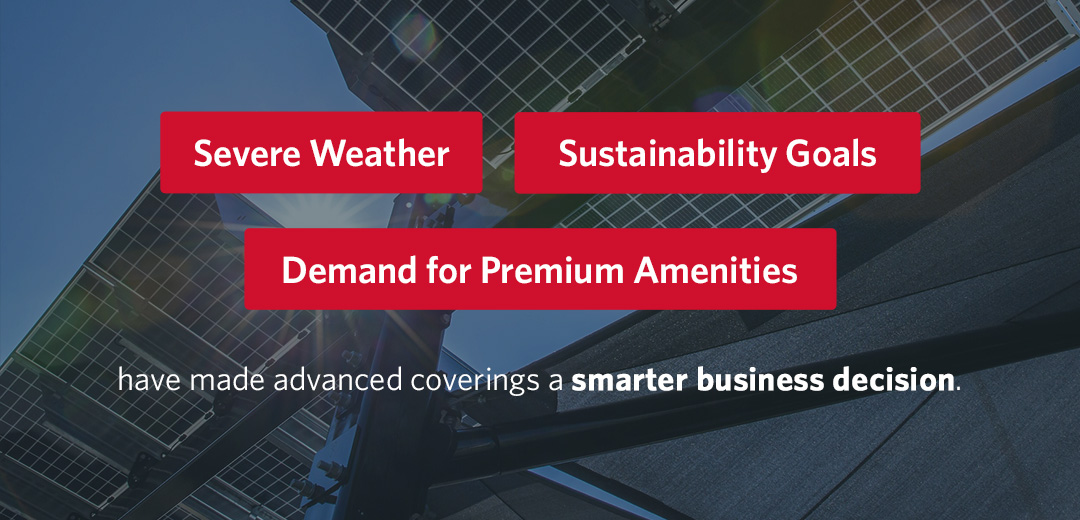
Covered parking has evolved from a temporary amenity to a full-time coverage and protection. Canopies traditionally blocked some weather without providing long-term value. Today, more users and parking facilities are needed. Severe weather, sustainability goals, and demand for premium amenities have made advanced coverings a smarter business decision. Permanent structures can be stronger, better, and more cost-effective.
2. Durability and Compliance
Modern coverings must go beyond shade. Owners and developers want systems engineered for durability. They need to withstand high winds and hail. Compliance with the Americans with Disabilities Act (ADA) is equally important. Stall widths, slopes, and routes need to be integrated into the design. Stronger coverings protect accessibility and parking investments.
3. Lasting Performance
Temporary nets are quick solutions, but they often cannot deliver the consistency and life cycle of engineered canopies. Over time, they can sag and collapse under loads. Permanent protection structures are designed to maintain vertical clearance and integrate drainage. With regular maintenance, they’ll remain strong and operational for years.
4. Improved User Experience
Covered parking makes using parking structures nicer. Vehicles remain cooler throughout the day with canopies blocking out the sun. Lot users stay comfortable as they walk to the building. Canopies are a clear indicator of concern for user and vehicle well-being. When users feel protected from the weather, they’re more likely to return. Additionally, facilities can mitigate heat-related risks and improve site accessibility.
5. Reduced Maintenance
Exposed parking needs regular maintenance to clear snow and debris. Constant exposure can wear out pavement and markings more quickly. Durable coverings prevent snow pileups and stop the sun from fading markings. Facilities can maintain the canopy and keep the pavement clear year-round. With less pavement downtime and maintenance, lots can stay operational longer.
6. Long-Term Value
Consider the long-term value of permanent coverings — Auto dealerships protect inventory from damage losses, airports can charge premiums for parking, and developers can offer canopies as a tenant perk. Include them in the base rent or offer some tenants covered parking for an extra monthly fee. Covered parking is a strategic infrastructure that attracts more users and earns its investment costs back through increased fees. Permanent systems elevate a facility’s parking over the competition and make it a more valuable space.
Solar Covered Parking Structures for On-Site Power
Solar covered parking structures are the next innovation in durable, multipurpose design. Solar elevates parking spaces from standard vehicle storage and converts them into energy. Facilities can protect vehicles from hail and generate renewable energy directly on-site. The larger the parking lot, the more solar power operations can use.
Financial Savings
Energy generated from solar panels can be used immediately to offset electricity consumption, lowering facilities’ monthly costs. They can often return excess power to the grid, earning credits or additional revenue based on location. For many property owners, this shift turns parking into another revenue stream instead of an expense. Additionally, facilities may be able to access government or local tax credits and benefits from investing in sustainable infrastructure.
Sustainable Parking
Solar-covered parking also demonstrates a clear commitment to sustainability. Companies can face pressure to go green. A canopy project is a visible example of that commitment to the environment. Customers, tenants, employees, and other users can all see that the business is investing in green energy. Use renewable energy to power operations or charge EVs. Covered parking has unused real estate on top of the structure — turn it into a business asset instead of wasting the real estate.
Improved Investments
Directly integrating solar canopies into hail protection systems provides and an even stronger ROI. Properties no longer have to choose between vehicle protection and power — it does both. It’s an ideal solution for businesses that want to protect vehicles and save money on generating energy.
How Industries Can Use Solar Covered Parking
Covered solar parking doesn’t just benefit automotive manufacturing and car dealerships. Permanent canopies are valuable for a wide range of industrial applications. If a site has parking areas, it can likely benefit from multifunctional coverage. Use solar-covered parking in:
- Airports: Travelers are often willing to pay more for covered stalls. If they’re taking extended trips, it helps to have protection for their vehicles. Airports can use these premium spaces to generate new revenue. Solar canopies offset the airport’s energy demands.
- Distribution centers: Distribution and logistics hubs can use covered parking to protect their fleets and supply chains. Severe weather can immobilize fleets and delay travel. Protecting trucks under canopies reduces the risk of disruptions. Combine that with solar energy, and centers can power warehouses and charge infrastructure for more efficient fleets.
- Commercial real estate: Vehicle protection is a great way to offer appealing bonuses to tenants. Covered parking is an amenity for long-term tenants. They like sustainable, protective infrastructure, and landlords might see more lease renewals.
- Health care and campuses: Likewise, universities, health care campuses, and municipalities can protect users and power their facilities. Plus, solar can support sustainability targets and tax breaks.
The VPS Difference in Vehicle Protection
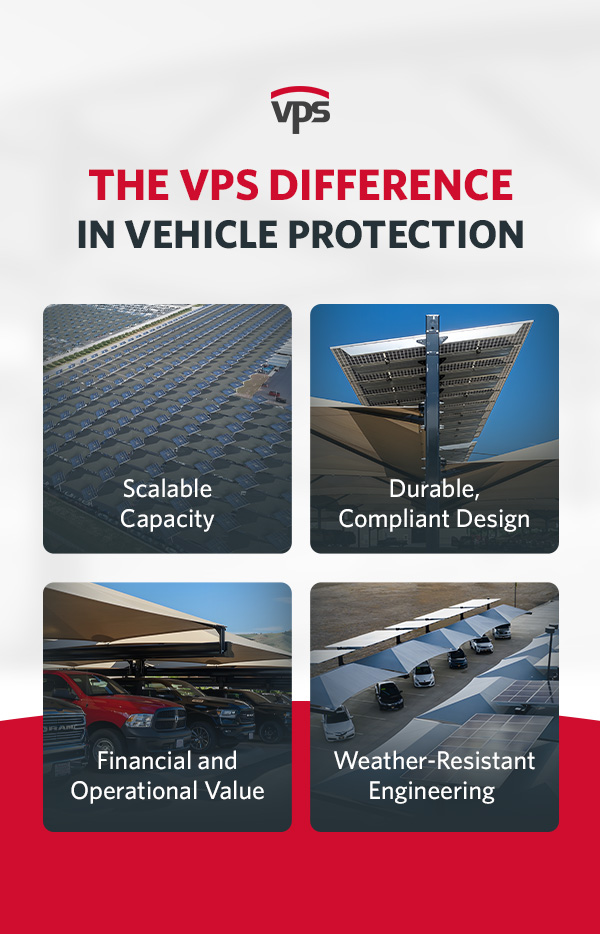
Permanent covered parking is quickly becoming critical infrastructure. Organizations dealing with severe weather can turn to reliable partners to ensure they get structures engineered to perform. VPS has set the standard for industrial hail canopies and solar-integrated projects at scale.
Scalable Capacity
Many providers offer shade solutions, but few can meet the needs of industrial-scale protection. VPS specializes in industrial hail canopies for vehicles. VPS has the manufacturing and logistical capacity to cover thousands of stalls in a single deployment. This scale has made VPS the trusted choice for automotive manufacturers, airports, and dealerships that cannot afford disruptions. Unlike general shade companies, VPS dedicates its expertise to large-scale vehicle protection structures designed to meet the most demanding specifications.
Durable, Compliant Design
Every VPS canopy is engineered to meet or exceed building codes and withstand severe storms. Parking structures are an investment in future performance and durability. VPS structures maintain clearances for ADA standards and integrated drainage, accounting for unique site needs. Temporary covers cannot last, and they require regular replacement. Permanent structures are designed for simple maintenance and years of performance.
Financial and Operational Value
Vehicle protection translates directly into reduced risk of vehicle loss. Inventory or parked cars are protected from hail damage. Additional revenue from solar power or premium parking access goes back into profit. Better protection for user vehicles encourages people to return to the facility over the competition. It’s a direct investment in saving money and demonstrating commitment to users.
Weather-Resistant Engineering
VPS directly addresses weather concerns with canopies engineered for regional threats. Each system is developed with the location and purpose in mind. VPS builds Midwest projects to withstand repeated impacts from frequent hailstorms. In the South, engineering must consider hurricane-force winds and uplift loads. For the North, canopies need to hold strong against snow loads and excess drainage.
VPS partners closely with architects to design and install canopies that work with the environment. Every detail is accounted for, from durable fabric spans to detailed drainage paths. Industrial projects cover wide areas, which means VPS must build long-lasting structures at an extremely large scale. Our attention to detail means we can secure entire campuses against severe weather and wear.
Kia Manufacturing Facility Case Study
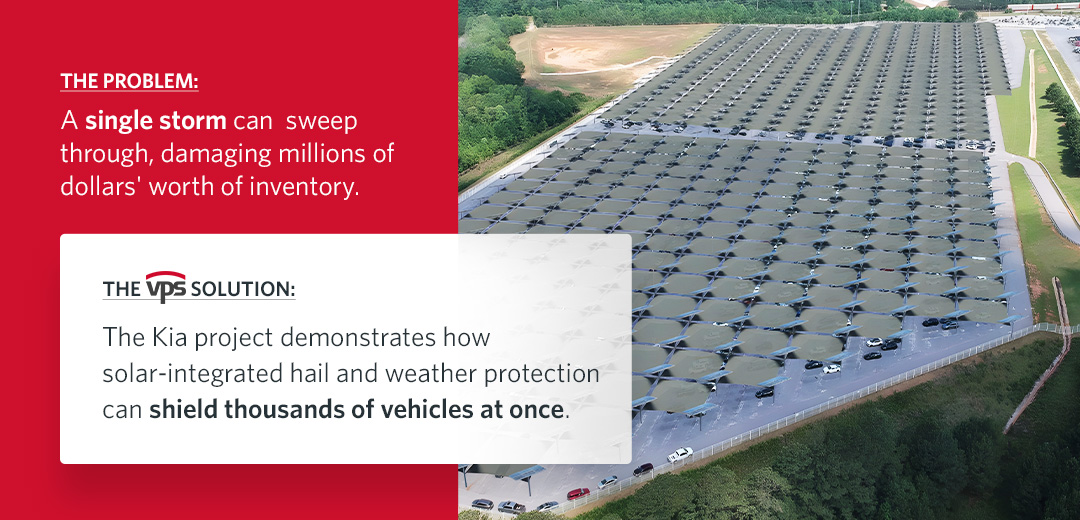
VPS partnered with Kia to demonstrate the possibilities of vehicle protection and renewable energy. At Kia’s Georgia manufacturing campus, VPS delivered one of the most ambitious parking canopy systems ever constructed in the U.S. The project covers more than 3.2 million square feet of inventory space with industrial hail canopies for vehicles. It also integrates 13 megawatts of solar generation into the protective structures. The result is a solution that addresses weather risks and sustainability.
Advanced Hail Protection
Automotive manufacturers are constantly looking for ways to avoid hail damage. A single storm can sweep through, damaging millions of dollars’ worth of inventory. The Kia project demonstrates how solar-integrated hail and weather protection can shield thousands of vehicles at once. The structures are engineered to meet building codes while withstanding years of weathering. Strong canopies protect Kia’s inventory from catastrophic hail losses.
Integrated Solar Power
The project also transforms the parking canopy into a renewable energy asset. The 13 megawatts of solar canopy capacity allows Kia to generate electricity on-site. This energy supports daily operations and maintains steady energy costs. Kia can use solar power to contribute to its sustainability goals. It shows how the future of infrastructure can be renewable and long-lasting.
Successful Execution
Delivering a canopy system at this scale requires a partner with advanced manufacturing capacity and project management skills. VPS was able to deliver one of the largest vehicle protection and solar canopy systems in the nation. Large-scale operations can absolutely find solutions for engineering and installing advanced parking structures that give back to the business.
The Future of Parking Infrastructure
Parking is traditionally an expense that operations need to support business. Solar-covered parking structures are the first step in changing that. Combining durability and renewable energy opens the door to more advanced solutions:
- EV charging: Parking canopies are ideal for integrating EV charging stations. They protect drivers and vehicles from hail while encouraging new users to use the parking facility.
- Clean energy: Solar panels support operational costs with renewable resources. Look to the future for more solar panel installations and canopies made from durable, recycled materials.
- Urban heat islands: Replacing natural spaces with buildings and pavement contributes to the urban heat island effect. Shading large paved surfaces keeps campuses cooler, since pavement no longer absorbs direct sunlight all day.
- Smart systems: Smart technology is improving parking monitoring. Sensors can track stall occupancy, EV charging demand, and canopy performance. Smart systems can also support maintenance planning to maximize uptime.
Partner With VPS for Next-Generation Covered Parking
The Kia project proves what’s possible when protection and power are engineered together. VPS delivers large-scale, permanent solutions that reduce weather risk and generate renewable energy. Our team has the capacity to design and install systems that transform parking into a long-term asset for dozens of industries.
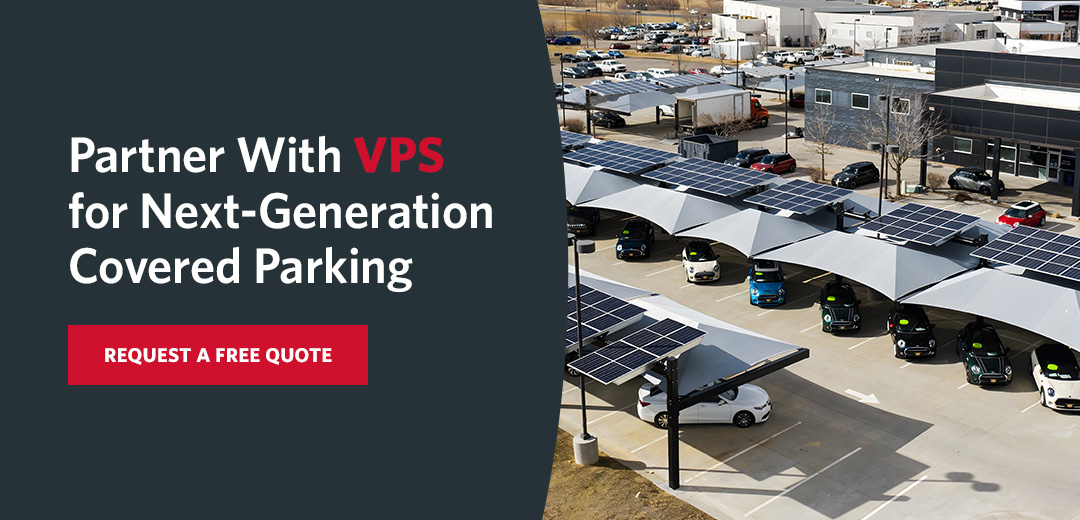
Request a free quote today to explore how VPS parking structures can support facility goals.